
Mumbai Metro Line 8 to Connect CSMIA and NMIA: Full Route, Stations, and Benefits Explained
By Lokmat Times Desk | Updated: December 9, 2025 17:45 IST2025-12-09T17:39:30+5:302025-12-09T17:45:57+5:30


Mumbai Metro Line 8, also known as the Gold Line, is set to become the city’s first dedicated airport-to-airport ...
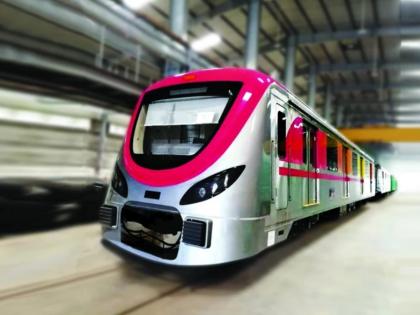
Mumbai Metro Line 8 to Connect CSMIA and NMIA: Full Route, Stations, and Benefits Explained
Mumbai Metro Line 8, also known as the Gold Line, is set to become the city’s first dedicated airport-to-airport metro corridor, linking Chhatrapati Shivaji Maharaj International Airport (CSMIA) in Mumbai with the upcoming Navi Mumbai International Airport (NMIA). Planned and approved by the Maharashtra government, the Detailed Project Report (DPR) was submitted in late 2025. Construction is expected to begin soon, with completion targeted around 2029. Once operational, the line will cut travel time between the two airports from 70–120 minutes by road to just 30–45 minutes, offering a high-speed, air-conditioned, and efficient commuting option for travelers, airport staff, and logistics.
The 34.89–40 km corridor combines underground and elevated sections to navigate Mumbai’s dense urban and suburban landscapes. The underground section spans approximately 9.25 km from CSMIA Terminal 2 to Chheda Nagar in Chembur, featuring six stations that will integrate with major city nodes. From there, the line transitions to an elevated alignment, crossing the Vashi Creek via a dedicated bridge and running along the Sion–Panvel Highway. It enters Navi Mumbai, serving key nodes such as Nerul, Seawoods, Ulwe, and finally reaching NMIA. The line includes a total of around 20 stations—14 elevated and six underground—with 11 of them within Navi Mumbai.
Mumbai Metro Line 8 Stations:
- CSMIA Terminal 2 (starting point, integrated with airport facilities).
- Marol Naka (interchange with Lines 1 and 3).
- Saki Naka (interchange with Line 1).
- Powai.
- Kanjurmarg (interchange with Line 6).
- Mulund East.
- Airoli.
- Ghansoli.
- Koparkhairane.
- Mankhurd (entry to Navi Mumbai).
- Vashi.
- Nerul (major interchange with Line 1 extension).
- Belapur CBD (interchange with Navi Mumbai Metro Line 1).
- Seawoods.
- Ulwe.
- NMIA Terminal 1 and Terminal 2 (end points, inside the airport for seamless access).
Key stations along the route include CSMIA Terminal 2 (starting point), Marol Naka and Saki Naka (interchanges with Lines 1 and 3), Powai, Kanjurmarg (interchange with Line 6), Mulund East, Airoli, Ghansoli, and Koparkhairane. Mankhurd serves as the entry point to Navi Mumbai, followed by Vashi, Nerul (interchange with Line 1 extension), Belapur CBD (interchange with Navi Mumbai Metro Line 1), Seawoods, Ulwe, and NMIA Terminals 1 and 2. The final two stations lie within the airport campus, providing seamless access for passengers. The alignment also passes educational hubs like Dr. D.Y. Patil University, commercial areas including Apollo Hospital, and community landmarks such as Wonders Park, ensuring connectivity across residential, institutional, and business districts.
The project is being developed by the Mumbai Metropolitan Region Development Authority (MMRDA) and CIDCO through a public-private partnership (PPP), with an estimated cost of ₹23,000 crore. Metro Line 8 will integrate with other metro corridors (Lines 1, 3, and 6) and the Navi Mumbai Metro (Line 1A extension), as well as key rail hubs such as Lokmanya Tilak Terminus (LTT), ensuring seamless transfers for local and outstation travelers.
Once operational, Metro Line 8 is expected to handle up to 900,000 passengers daily, boosting Navi Mumbai’s development as a transit hub, supporting NMIA’s operations from day one, and reducing congestion along Eastern Express Highway and Sion–Panvel Highway corridors. As of December 2025, the DPR has been approved, and viability gap funding is being sought from state and central governments. CIDCO is overseeing the Mankhurd–NMIA stretch.
The Gold Line promises to be a game-changer for Mumbai’s mobility, providing fast, efficient, and direct airport connectivity comparable to global cities like London and Dubai. By combining speed, convenience, and integration with other transit networks, Metro Line 8 is poised to transform inter-airport travel while facilitating urban growth across Navi Mumbai and surrounding regions.
Open in app