
Dubai airports navigate regional conflict to serve 6 million passengers
By ANI | Updated: May 4, 2026 17:40 IST2026-05-04T23:07:56+5:302026-05-04T17:40:13+5:30



New Delhi [India], May 4 : Dubai Airports powers through war disruption with 6 million passengers, maintaining global connectivity ...
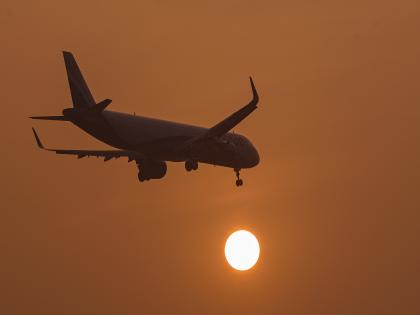
Dubai airports navigate regional conflict to serve 6 million passengers
New Delhi [India], May 4 : Dubai Airports powers through war disruption with 6 million passengers, maintaining global connectivity even as airspace constraints forced widespread changes to flight schedules.
According to a report by Gulf News, the operator announced on Monday that the hub supported more than 32,000 aircraft movements and handled 213,000 tonnes of cargo between late February and April 30. Dubai International (DXB) continued operating at a reduced capacity by constantly adjusting flight schedules and routes in line with available airspace.
The impact of the regional crisis is reflected clearly in the first-quarter figures for 2026. DXB welcomed 18.6 million passengers in the first quarter, down 20.6 per cent year-on-year, as airspace constraints intensified through March.
Traffic in March alone dropped sharply to 2.5 million passengers, representing a 65.7 per cent decline that highlighted the severity of the operational disruption. This followed a period of significant growth in 2025, when Dubai welcomed a record 95.2 million passengers after the pandemic.
India remained the airport's largest market during this period with 2.5 million passengers, followed by Saudi Arabia with 1.3 million and the United Kingdom with 1.2 million travellers. Pakistan accounted for 918,000 passengers, while London stood as the busiest destination city, followed by Mumbai and Jeddah.
Paul Griffiths, CEO of Dubai Airports, said the events were unprecedented for a global hub.
"Maintaining the smooth operation of DXB is critical to keep global journeys moving," he said, noting that a significant share of international transfer traffic flows through the region.
"Our focus has been on keeping operations safe and consistent through close coordination and rapid decision-making across the entire airport community," Griffiths added.
Cargo volumes during the period fell to 399,600 tonnes, a decline of 22.7 per cent, while total aircraft movements decreased 20.8 per cent to 88,000.
Despite these pressures, baggage performance remained strong as the hub processed 17.6 million bags. The mishandling rate stayed at 3.5 per 1,000 passengers, which remained significantly better than the global average of 6.3, as per the report.
Operations were maintained through constant coordination between airlines, ground handlers, and air traffic authorities. Capacity depended on the availability of flight paths across neighbouring countries, meaning schedules required adjustment in real time as conditions changed.
Close collaboration across the airport ecosystem, including home carriers Emirates and flydubai, helped ensure passengers and cargo continued moving during the height of the disruption.
Dubai's position as a global aviation hub remains tied to transferring passengers. Of the 99.3 million passengers whose journeys could be routed through the region, Middle East hubs captured 70 per cent, with DXB alone handling 32 per cent of that traffic.
"At the same time, long-term expansion plans at Al Maktoum International Airport are continuing, reinforcing Dubai's ambitions to expand its role as a global aviation hub in the years ahead," the report said.
Disclaimer: This post has been auto-published from an agency feed without any modifications to the text and has not been reviewed by an editor
Open in app