
India's power sector set for up to 6 per cent CAGR on multi-vector capex upcycle: Citi
By ANI | Updated: May 9, 2026 12:30 IST2026-05-09T17:57:22+5:302026-05-09T12:30:13+5:30



New Delhi [India], May 9 : India's power sector is positioned for a sustained growth trajectory with a medium-term ...
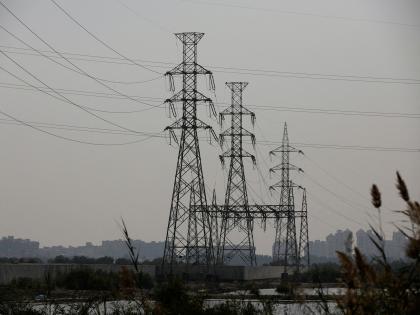
India's power sector set for up to 6 per cent CAGR on multi-vector capex upcycle: Citi
New Delhi [India], May 9 : India's power sector is positioned for a sustained growth trajectory with a medium-term forecast set at a 5-6 per cent CAGR, supported by the convergence of electrification, data centres, cooling loads, and manufacturing sectors. According to a Citi Research report, the country is currently witnessing its first-ever multi-vector capital expenditure upcycle that spans thermal, renewables, transmission, and grid storage.
"Our medium-term forecast is set at a 5-6% CAGR on the strength of electrification, data centres, cooling load, and policy-supported manufacturing sectors," the report stated.
The Citi report highlighted that this investment phase remains a visible, multi-year story as the breadth of power demand continues to expand across the nation. Unlike previous cycles driven by single factors, this broad-based upcycle draws strength from multiple load vectors, which provides greater visibility and sustainability to the ongoing momentum.
"India's first-ever multi-vector capex upcycle - straddling thermal, renewables, transmission, and grid storage - continues to chug along," the report said.
The regulatory environment is shifting its focus from mere capacity addition to ensuring system reliability and flexibility. Favourable policies and structural frameworks, such as the Central Electricity Authority (CEA) resource adequacy guidelines and long-term transmission plans, serve as anchors for this phase. Incremental drivers like deeper electrification and the first meaningful wave of grid storage are necessitating sharp rebounds in thermal and transmission infrastructure.
"Regulators' focus has pivoted from capacity to reliability/flexibility, and favorable policies are providing greater visibility," the report mentioned.
The report suggested a significant ramp-up in generation capacity. GENCO capacity additions between FY26 and FY32 are expected to be 2.3 to 2.5 times higher than the levels seen between FY19 and FY25. This surge is necessary to address the time-of-day sensitivity of demand and supply dynamics as the energy mix evolves.
"GENCO capacity additions over FY26E-32E will be 2.3-2.5x those of FY19-25 levels, on our estimates, backed by the requirement to meet time-of-day sensitivity of demand-supply dynamics," the report added.
While growth in power demand showed some deceleration over the last two years, the report suggested that headline deficits often mask specific strains occurring during non-solar hours.
Looking toward 2026, the report highlighted that the sector may see tailwinds linked to El Nino, which typically increases demand for agricultural pumps and cooling systems.
"While power-demand growth has decelerated over the past two years, headline power deficits mask non-solar-hour strains....and in 2026 we see El Nino-linked tailwinds (boosting agri-pump and cooling demand)," the report clarified.
Citi noted that the system is now prioritising the mitigation of non-solar-hour power strains, a risk flagged by the CEA for the next two years in instances where capacity additions slip or demand surprises. Furthermore, progress on reforms within the draft National Electricity Policy 2026 is expected to provide additional support to demand.
"Although power-sector stocks have re-rated in the past month on a power-demand pickup, we believe they still have upside potential," the report stated.
Disclaimer: This post has been auto-published from an agency feed without any modifications to the text and has not been reviewed by an editor
Open in app