
No direct impact of oil price hike on India's fiscal situation: SBI Report
By ANI | Updated: May 18, 2026 11:35 IST2026-05-18T17:03:28+5:302026-05-18T11:35:13+5:30



New Delhi [India], May 18 : The retail fuel price hike of Rs 3 per litre has been implemented ...
No direct impact of oil price hike on India's fiscal situation: SBI Report
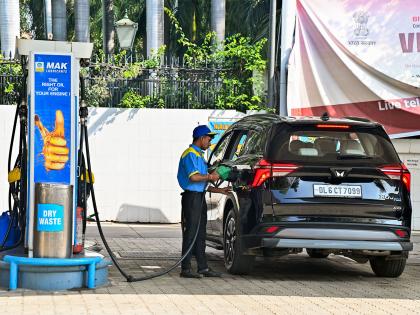
New Delhi [India], May 18 : The retail fuel price hike of Rs 3 per litre has been implemented to reduce the losses incurred by oil marketing companies (OMCs) due to unchanged fuel prices amidst rising Brent Crude prices. While immediate consumer price inflation shows an upward movement, according to SBI Research Ecowrap, "there is no direct impact of this hike on the fiscal situation."
The report noted that fuel consumption levels typically recover quickly after an initial price change.
"Historical data shows that hike in petrol and diesel price has been followed by a decline in consumption immediately after the hike, only to recover thereafter with no decline visible in the annual consumption levels. Further, immediate impact on CPI inflation is likely around 15-20 bps in May-June 2026. So we revise our FY27 forecast to 4.7%. There is no direct impact of this hike on the fiscal situation," the report stated.
The under-recoveries of OMCs on the sales of petrol and diesel are rising because retail prices remain unchanged for a long period. "According to the Union Minister, OMCs are incurring losses to the tune of Rs 1,000 crore per day, which amounts to around Rs 3.6 lakh crore a year," the report mentioned.
The current increase in oil price by Rs 3 provides a relief of Rs 52,700 crore in under-recoveries, which is 15 per cent of the expected total loss of the OMCs in financial year 2027.
The SBI report, outlining the fiscal implications if the government alters the current tax structure on fuel, said, "If we assume that the Government reduced the excise duty on petrol and diesel to zero from its current level of 11.9% and 7.8% respectively, it will lead to reduction in government revenue/gain of OMCs to the tune of Rs 1.9 lakh crore. This might increase fiscal deficit by 0.5% of GDP, if the government doesn't reduce the expenditure."
The overall loss of the government from an excise duty cut in the current fiscal, including the net loss from the Rs 10 duty cut in March, amounts to Rs 3 lakh crore. Currently, 15 per cent of the OMC loss is covered by the increase in retail price by Rs 3, and 53 per cent is covered with a reduction in oil excise duty to nil.
The report added that if Centre's excise duty is reduced to nil, it also impacts the revenue collections of state governments.
"Our estimates suggest that states would lose Rs 0.8 lakh crore if Centre's excise duty is reduced to nil, keeping all else same. However, higher oil prices will benefit states by around Rs 30,000 crore, so the net impact of excise duty cut on states revenue would be Rs 50,000 crore," the report stated.
Disclaimer: This post has been auto-published from an agency feed without any modifications to the text and has not been reviewed by an editor
Open in app