
Hydrogen could outperform electric in long transport; thorium seen as future fuel: Ex BARC Director
By ANI | Updated: April 28, 2026 19:20 IST2026-04-29T00:49:07+5:302026-04-28T19:20:08+5:30



Mumbai (Maharashtra) [India], April 28 : At a time when geopolitical tensions involving Iran and the US have brought ...
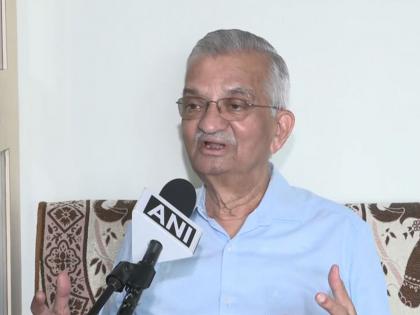
Hydrogen could outperform electric in long transport; thorium seen as future fuel: Ex BARC Director
Mumbai (Maharashtra) [India], April 28 : At a time when geopolitical tensions involving Iran and the US have brought global attention to energy security due to the virtual blockade on the Strait of Hormuz, a vital choke point for global energy transit, Anil Kakodkar, Former BARC Director & Indian Nuclear Scientist, on Tuesday said the world is entering a major transition in how energy is produced, stored and consumed, with nuclear energy and hydrogen likely to play a critical role.
Speaking on the broader implications, Kakodkar said the global transition away from fossil fuels will fundamentally change the energy landscape, moving from combustion-based systems to electricity-centric energy conversion.
"Today, by consuming fossil fuel, you first produce heat and then generate electricity. Tomorrow, a larger part of primary energy will come through electricity and then you have to convert it into other forms," the former BARC Director said.
Highlighting the future of transportation, Kakodkar said multiple clean mobility pathways are likely to emerge rather than a single dominant solution.
He noted that electric vehicles are likely to be more suitable for short-distance and urban transport, while hydrogen-based systems could become more viable for long-distance and heavy-duty transport.
"There are two parallel paths in transportation: electric transportation and hydrogen fuel transportation. For long-distance heavy transport, hydrogen may score over electric cars, whereas for city transport, electric mobility would be more suitable," he said.
Kakodkar also underlined the potential of nuclear energy in enabling cheaper hydrogen production, particularly through high-temperature processes that eliminate intermediate conversion losses.
He explained that hydrogen can be produced using electricity via electrolysis, but a more efficient alternative could be direct production using nuclear heat.
"You could produce hydrogen much more cheaply from high-temperature heat coming from nuclear power. If you eliminate intermediate conversion steps, energy cost reduces significantlyand in hydrogen, energy cost is the largest component," he said.
On global nuclear trends, Kakodkar observed that most countries continue to focus on uranium-based reactors, but emerging economies may face limitations due to fuel cycle and security-related constraints.
He said that for developing regions such as Asia, Africa, and Latin America, where energy demand is expected to rise sharply, nuclear energy will become unavoidable for clean energy access.
"Growth in energy needs is going to be much larger in emerging economies. Nuclear energy is inevitable. But with uranium, there are barriers. I think thorium would become the global source for the future," he added.
Kakodkar stressed the need for a comprehensive national and global strategy to manage the energy transition, given its technological, economic, and infrastructural complexity.
He noted that multiple technological pathways, including advanced nuclear systems, hydrogen production, and electrification, will need to evolve in parallel to ensure energy security while reducing carbon emissions.
The remarks come at a time when global economies are increasingly reassessing their energy strategies in the wake of geopolitical instability and climate commitments, with nuclear energy once again gaining attention as a stable, low-carbon alternative.
Disclaimer: This post has been auto-published from an agency feed without any modifications to the text and has not been reviewed by an editor
Open in app