
Taiwan condemns China after pressure forces cancellation of RightsCon 2026 in Zambia
By ANI | Updated: May 4, 2026 16:35 IST2026-05-04T22:02:11+5:302026-05-04T16:35:09+5:30



Taipei [Taiwan] May 4 : Taiwan's government on Sunday criticised China after an annual global digital rights conference, which ...
Taiwan condemns China after pressure forces cancellation of RightsCon 2026 in Zambia
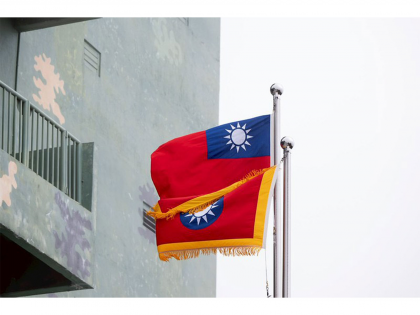
Taipei [Taiwan] May 4 : Taiwan's government on Sunday criticised China after an annual global digital rights conference, which was set to take place in Zambia later this week, was abruptly cancelled following pressure from Beijing over the participation of Taiwanese representatives, according to a report by Central News Agency (CNA).
In a statement, the Executive Yuan's Department of Human Rights and Transitional Justice said that China's actions to block both public and private sector participation in RightsCon 2026 were part of a broader effort to isolate Taiwan on the global stage. The department stated that Beijing aimed to "force the international community to ignore Taiwan's free and democratic system" and to pressure human rights advocates worldwide into remaining silent on issues such as surveillance and repression by authoritarian regimes.
The department added that the cancellation deprived Taiwan's civil society of an important opportunity to engage with global stakeholders on digital human rights issues. It also highlighted the importance of strengthening cooperation with international civil society to enhance digital and democratic resilience, and to protect key values such as freedom, democracy, the rule of law, and human rights in the digital sphere, as cited by the CNA report.
The 14th edition of RightsCon had been planned to be held in Lusaka, Zambia, from May 5 to May 8. However, organiser Access Now announced on May 1 that the event had been cancelled after Chinese officials reportedly pressured the Zambian government regarding the planned attendance of Taiwanese civil society participants.
"As a human rights organisation, we call out these violations of the fundamental freedoms of peaceful assembly and association, and interference with freedom of expression and civic space affecting the entire RightsCon community," Access Now said in a statement, as quoted by CNA.
China's claim over Taiwan remains a complex and longstanding issue rooted in historical, political, and legal factors. Beijing maintains that Taiwan is an integral part of China, a position reflected in its national policies, domestic legislation, and international statements. In contrast, Taiwan asserts a separate identity and functions independently with its own government, military, and economic system.
Taiwan's status continues to be a major subject of global debate, raising questions related to sovereignty, self-determination, and non-interference under international law, as noted by the United Service Institution of India. China's claim dates back to 1683, when the Qing Dynasty annexed Taiwan after defeating Ming loyalist Koxinga, though the island remained a relatively peripheral region under limited Qing administration.
A significant shift occurred in 1895 when the Qing ceded Taiwan to Japan following the First Sino-Japanese War, turning it into a Japanese colony for five decades. After Japan's defeat in World War II, Taiwan was placed under Chinese control, although the transfer of sovereignty was never formally finalised.
In 1949, the outcome of the Chinese Civil War led to the establishment of the People's Republic of China (PRC) on the mainland, while the Republic of China (ROC) retreated to Taiwan, continuing to claim authority over all of China. This resulted in competing claims of sovereignty, with the PRC governing the mainland and the ROC based in Taiwan.
Although Taiwan operates as a de facto independent state, it has refrained from declaring formal independence in order to avoid the risk of military confrontation with China.
Disclaimer: This post has been auto-published from an agency feed without any modifications to the text and has not been reviewed by an editor
Open in app