
"This issue has multiple motives": Former diplomat Mahesh Sachdev on US action against deposed dictator Maduro
By ANI | Updated: January 4, 2026 14:30 IST2026-01-04T19:56:59+5:302026-01-04T14:30:06+5:30


New Delhi [India], January 4 : Former diplomat Mahesh Sachdev on Sunday stated that allegations cited by US President ...
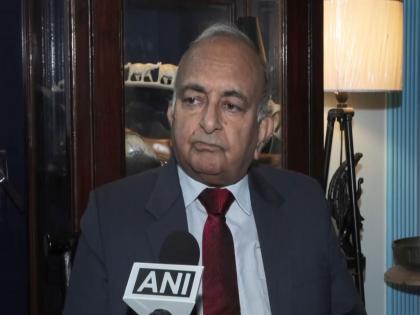
"This issue has multiple motives": Former diplomat Mahesh Sachdev on US action against deposed dictator Maduro
New Delhi [India], January 4 : Former diplomat Mahesh Sachdev on Sunday stated that allegations cited by US President Donald Trump in connection with the capture of deposed dictator Nicolas Maduro by the United States remain unproven, adding that the episode is shaped by a combination of legal, geopolitical and economic factors.
Explaining the legal dimension, Sachdev told ANI, "Trump has cited accusations of Nicolas Maduro heading a drug syndicate; these allegations are unproven, and a court trial apparently begins today in New York City."
Beyond the legal process, Sachdev said the situation must be viewed in a wider geopolitical framework. "This issue has multiple motives. First would be his alleged involvement in the drug case; second, Venezuela has been following a policy of relative independence from the United States and has been in the crossfire of Washington for quite a long time," he said.
He further pointed to sustained economic pressure on Caracas, adding, "Sanctions have been imposed on Venezuela, increasingly restricting its oil exports."
These remarks came amid statements by US President Donald Trump, who on Saturday said the United States would move to take control of Venezuela's vast oil reserves and encourage American companies to invest billions of dollars to revive the country's severely weakened oil industry, CNN reported.
Meanwhile, images released by US authorities showed deposed dictator Nicolas Maduro in handcuffs during a staged perp walk, during which he was seen wishing reporters and Drug Enforcement Administration (DEA) agents a Happy New Year and Good Night as he was led into custody.
As political developments unfolded in Caracas following Maduro's removal, Venezuela's Supreme Court ordered Vice President Delcy Rodriguez to assume the powers and duties of acting president, CNN reported. The order, announced late Saturday night local time, concluded that Maduro was in a "material and temporary impossibility to exercise his functions."
According to the ruling read by Justice Tania D'Amelio during a session broadcast on state television channel VTV, Rodriguez will "assume and exercise, as acting president, all the powers, duties, and faculties inherent to the office of president of the Bolivarian Republic of Venezuela, in order to guarantee administrative continuity and the comprehensive defense of the nation," CNN reported. Venezuela's constitution states that when there is a temporary or absolute absence of the president, the vice president must replace them.
Venezuela holds an estimated 303 billion barrels of crude oil, accounting for around one-fifth of global reserves, according to the US Energy Information Administration (EIA). Despite possessing the world's largest proven reserves, the country currently produces around one million barrels of oil per day, or about 0.8 per cent of global crude output.
According to the EIA, international sanctions on the Venezuelan government, prolonged economic turmoil, chronic underinvestment and poor maintenance have contributed significantly to the collapse of the oil sector, CNN reported.
CNN noted that much of Venezuela's crude is heavy and sour, requiring specialised equipment and advanced technical expertise to extract and refine. Heavy crude is used to produce diesel, asphalt and fuels for factories and heavy machinery, while the United States primarily produces light, sweet crude better suited for gasoline production.
From a strategic perspective, CNN reported that Venezuela's geographic proximity to the US and the relatively low cost of its crude make its oil particularly attractive for Washington. A US-led overhaul of Venezuela's oil infrastructure could significantly increase production over time, potentially reshaping global supply dynamics.
Providing background, former US National Security Advisor John Bolton told CNN that a plan to remove Maduro had been presented to Trump during his first term but did not progress because officials were unable to keep the president "focused" on the issue.
Bolton said Trump was "very interested in the Venezuelan oil" during his first term, but despite efforts by his team, they "couldn't keep him focused on it." He added that Venezuela's opposition at the time believed economic pressure alone would be sufficient to split Maduro's regime.
According to CNN, the United States later carried out what Trump described as a "large-scale strike against Venezuela" and captured Maduro to face charges, executing the regime change effort without congressional approval.
Disclaimer: This post has been auto-published from an agency feed without any modifications to the text and has not been reviewed by an editor
Open in app