
Trump signals control of Venezuelan oil reserves, drawing global attention
By IANS | Updated: January 9, 2026 10:05 IST2026-01-09T10:03:12+5:302026-01-09T10:05:20+5:30


Washington, Jan 9 President Donald Trump is framing the US intervention in Venezuela not as a short-term military ...
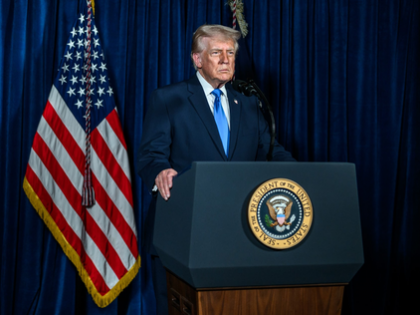
Trump signals control of Venezuelan oil reserves, drawing global attention
Washington, Jan 9 President Donald Trump is framing the US intervention in Venezuela not as a short-term military action but as a long-range economic and geopolitical reset—one that he says reclaims control of oil assets, deters rivals, curbs drug trafficking and sends a signal well beyond Latin America.
In a sit-down interview on Fox News’ Hannity, Trump laid out a sweeping rationale for the operation that led to the capture of Venezuelan leader Nicolás Maduro, repeatedly returning to oil as the central lever of US power.
“They took the oil from us years ago,” Trump said, referring to the nationalization of American energy assets in Venezuela. “We just took it back.”
The president said the United States has already secured large quantities of Venezuelan crude under sanctions enforcement. “We’ve taken $4 billion worth of oil in one day,” he said, adding that the total would rise over time.
Trump said major American companies would now rebuild Venezuela’s collapsed energy sector. “The top 14 companies are coming,” he said. “They’re going to rebuild the whole oil infrastructure.”
He argued that restoring production would have global effects. “It means lower oil prices all over the world,” he said, a claim that underscores how closely the administration is linking foreign policy to commodity markets.
While the president acknowledged that reviving Venezuela’s oil industry would take time—“The oil will take a while,” he said—he made clear that US involvement would not be brief. “We’re going to be there till we straighten out the country,” Trump said.
The comments suggest an open-ended US role, with economic oversight preceding political transition. On elections, Trump said conditions are not yet in place. “They wouldn’t even know how to have an election right now,” he said. “The country’s become third world.”
Beyond economics, Trump portrayed the Venezuela action as a demonstration of deterrence. He said the operation sent a message across the region, particularly to governments in Cuba and Colombia.
“They saw what happened,” he said. “They’re treating us with great respect.”
Trump noted that Maduro's removal had prompted other leaders to fall into line, reducing the likelihood of confrontation. The implication was that decisive action in one country reshapes behavior in others.
Framing the operation as a law-enforcement success with immediate security benefits, he accused the former Venezuelan government of exporting crime to the United States. “He emptied his prisons into the United States,” Trump said. “He emptied his mental institutions and insane asylums.”
He claimed a sharp reduction in maritime drug trafficking. “We’ve knocked out 97 per cent of the drugs coming in by water,” he said. “There are very few boats operating right now.” While he did not provide independent verification of that figure, he returned to the theme repeatedly, arguing that military force paired with law enforcement had produced tangible results.
Trump said the Venezuela raid was risky but successful. “We went right into the middle of a fort,” he said. “Thousands of soldiers.” He added that US forces reached Maduro within minutes and exited without losing a soldier.
“We didn’t lose a soldier,” he said, though he acknowledged injuries. “A couple of very brave helicopter pilots were wounded pretty badly,” Trump said. “But they’re good. They’re in good shape.” Trump contrasted the success with past US military failures. “You didn’t have a Jimmy Carter disaster,” he said, referring to the failed Iran hostage rescue. “You didn’t have a Biden Afghanistan disaster.”
Trump repeatedly declined to spell out red lines for further escalation. “I wouldn’t want to tell you that,” he said when asked about conditions for deeper US involvement.
Disclaimer: This post has been auto-published from an agency feed without any modifications to the text and has not been reviewed by an editor
Open in app