
Mumbai Weather Update: AQI Nears 200 PM2.5 and PM10 Spike Sparks Health Concerns Across City, Temperature Hovers Near 22 Degrees
By Lokmat Times Desk | Updated: December 28, 2025 09:26 IST2025-12-28T09:26:03+5:302025-12-28T09:26:47+5:30


Mumbai’s air quality witnessed a significant decline on December 28, Sunday morning as pollution levels surged into the unhealthy ...
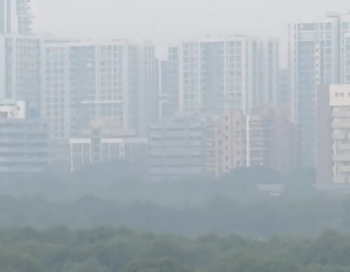
Mumbai Weather Update: AQI Nears 200 PM2.5 and PM10 Spike Sparks Health Concerns Across City, Temperature Hovers Near 22 Degrees
Mumbai’s air quality witnessed a significant decline on December 28, Sunday morning as pollution levels surged into the unhealthy range. The city’s Air Quality Index rose to 197, causing concern among residents beginning their day. Real-time monitoring around 7.34 am revealed a sharp increase in airborne particulate matter, affecting people commuting to work, exercising outdoors, or travelling for daily routines. This deterioration occurred despite clear skies and strong sunlight, indicating that visual weather conditions did not reflect the actual pollution levels. The situation once again underlined the intensifying problem of winter-related air pollution in Mumbai.
Fine particulate matter emerged as the most serious contributor to the worsening air conditions. Data showed PM2.5 concentrations reaching 119 micrograms per cubic metre, while PM10 levels were recorded at 151 micrograms per cubic metre, both far exceeding recommended safety standards. These microscopic particles are especially harmful as they penetrate deep into the respiratory system and may enter the bloodstream. Prolonged exposure increases the likelihood of breathing issues, cardiovascular stress, and other long-term health complications, making particulate pollution a major public health concern for the city.
#WATCH | Maharashtra: A thin layer of smog lingers in the air around Bandra Kurla Complex in Mumbai this morning.
— ANI (@ANI) December 28, 2025
CPCB (Central Pollution Control Board) claims that AQI (Air Quality Index) around the area is 123, categorised as 'Moderate'. pic.twitter.com/CLGgpS3wzN
Other air pollutants, including carbon monoxide, nitrogen dioxide, sulphur dioxide, and ozone, were measured within relatively acceptable limits. However, medical professionals emphasised that elevated particulate matter alone can significantly affect health, even when other pollutants remain lower. High levels of PM2.5 and PM10 can trigger irritation, coughing, fatigue, and aggravated respiratory problems. Experts warned that residents should not be complacent simply because other pollutant readings appear stable, as particulate pollution continues to pose serious risks during the winter months.
Weather conditions on Sunday offered little relief from the pollution buildup. Temperatures remained mild between 22 and 23 degrees Celsius, with humidity levels around 55 to 57 per cent. Wind speeds stayed low at nearly 10 kilometres per hour, reducing the natural dispersion of pollutants. The presence of mist in certain areas further worsened early morning air quality by trapping contaminants closer to the ground. Health professionals advised citizens to reduce outdoor exposure, especially vulnerable groups, and remain alert as unstable air conditions may persist.
Open in app