
Maharashtra announces major land record reform for expanding urban areas
By IANS | Updated: May 6, 2026 22:45 IST2026-05-06T22:40:15+5:302026-05-06T22:45:10+5:30



Mumbai, May 6 Maharashtra Revenue Minister Chandrashekhar Bawankule on Wednesday announced that land records in villages incorporated into ...
Maharashtra announces major land record reform for expanding urban areas
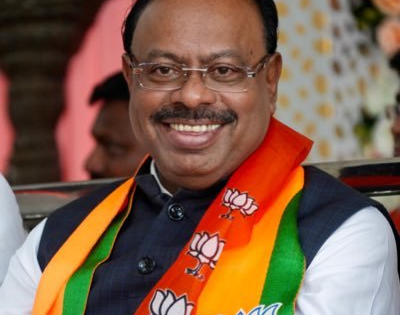
Mumbai, May 6 Maharashtra Revenue Minister Chandrashekhar Bawankule on Wednesday announced that land records in villages incorporated into municipal councils and corporations following boundary expansion will be converted into property cards, with the existing 7/12 land records set to be discontinued.
The move is aimed at benefiting residents in newly urbanised areas and streamlining land administration.
Minister Bawankule said that when a village or rural settlement becomes part of a municipal corporation or municipal council, the nature of the land changes from agricultural to non-agricultural (NA) or urban use.
“In such cases, discontinuing the 7/12 land record and replacing it with a property card is legally more appropriate and convenient,” he said.
The Minister added that the state government would soon issue orders to implement the decision across Maharashtra.
Officials said the move would simplify land administration in areas that have undergone jurisdictional changes following urban expansion.
The Minister directed the Revenue Department to begin the process of closing 7/12 land records in such areas and ensure preparation and distribution of property cards to eligible landholders.
The transition is expected to simplify property transactions, as property cards are considered a clearer and more standardised proof of ownership in urban areas.
Officials said the move would also help reduce procedural hurdles faced by citizens while securing bank loans, where discrepancies in land records often lead to delays.
In addition, the transition is expected to bring greater consistency and integration in land documentation by aligning practices in newly merged areas with those already followed in established urban jurisdictions.
Officials added that this would help reduce ambiguities and disputes arising from dual land record systems.
Meanwhile, Tata Memorial Hospital has successfully installed three state-of-the-art Automated Tube Labelling and Barcoding Systems (APTL), Chief Minister Devendra Fadnavis said on Wednesday.
The project has been implemented under a Corporate Social Responsibility (CSR) initiative.
Highlighting the benefits of the new technology, CM Fadnavis said the automated systems would handle the labelling and barcoding of samples automatically, significantly reducing the possibility of human error.
“This advancement will improve diagnostic accuracy and lead to substantial enhancement in patient safety. It will also make the clinical workflow within the hospital more streamlined and efficient,” the Chief Minister said.
In the treatment of critical illnesses such as cancer, precision and timely intervention are crucial.
Officials said the APTL system is expected to eliminate issues such as sample mix-ups, delays and misidentification.
This, in turn, will provide doctors with more reliable reports and help accelerate the overall treatment process.
The integration of the new technology is also expected to align the hospital’s laboratory management systems with international standards.
The Chief Minister said such upgrades in public healthcare institutions through CSR support are contributing to positive changes in the healthcare sector.
“The implementation of the APTL system at Tata Memorial Hospital will bring transparency, speed and precision to the diagnostic process. Prioritising patient safety through effective use of modern technology is a matter of pride for Maharashtra,” CM Fadnavis said.
He added that CSR investments in healthcare infrastructure would play a crucial role in strengthening high-quality medical services in the future.
Disclaimer: This post has been auto-published from an agency feed without any modifications to the text and has not been reviewed by an editor
Open in app