
Odisha: JPC examines bills to reform political system
By IANS | Updated: April 29, 2026 18:30 IST2026-04-29T18:26:55+5:302026-04-29T18:30:29+5:30



Bhubaneswar, April 29 A Joint Parliamentary Committee led by its Chairperson, Bharatiya Janata Party Member of Parliament Aparajita ...
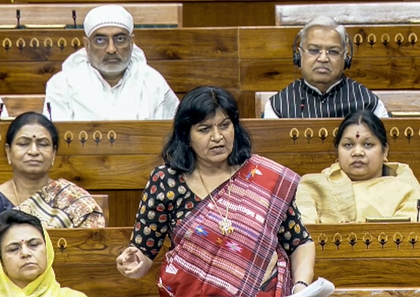
Odisha: JPC examines bills to reform political system
Bhubaneswar, April 29 A Joint Parliamentary Committee led by its Chairperson, Bharatiya Janata Party Member of Parliament Aparajita Sarangi, on Wednesday held discussions with senior officials of the Odisha government and different organisations on three key legislations, including the Constitution (130th Amendment) Bill, 2025; the Jammu and Kashmir Reorganisation (Amendment) Bill, 2025; and the Union Territories Government (Amendment) Bill, 2025.
Briefing the media persons on the legislation, Sarangi said the Joint Parliamentary Committee is actively consulting stakeholders across the country on key legislative proposals aimed at decriminalising politics and strengthening constitutional morality.
Referring to the three Bills introduced in the Lok Sabha by Union Home Minister Amit Shah on August 20, 2025, Sarangi said the proposed laws are of a “sensitive and far-reaching nature”, with a long-term vision to clean up the political system.
“The core objective of these Bills is to safeguard constitutional morality and make our democracy cleaner, more transparent, and free from criminality,” she said.
Sarangi noted that following disruptions in the Lok Sabha, the Bills were referred to a Joint Parliamentary Committee in November 2025.
The committee held its first meeting on December 4, 2025, and has since been engaging in extensive consultations with stakeholders, including state governments, institutions, and experts.
“We have travelled across states and also invited stakeholders to Delhi. So far, we have interacted with several state governments, including Odisha, Maharashtra and others, as well as multiple institutions,” she said, adding that the suggestions received are constructive and valuable.
She added that while there are differing opinions on certain provisions, there is a broad consensus on the intent behind the Bills, noting that no one has questioned the spirit of the legislation and there is a shared understanding that politics must be decriminalised.
Highlighting a key provision, Sarangi said the Bills propose that any minister, chief minister, or even the prime minister would have to step down if they remain in custody beyond a specified period.
“This sends a strong message that no one is above the law. Whether it is a minister, chief minister, or the prime minister, if they are in custody for a defined period, they will have to relinquish office,” she said.
She emphasised that the move would enhance accountability and prevent situations where individuals continue to govern while being in jail.
“The people of the country expect that those in high office uphold the highest standards of integrity and constitutional morality,” she added.
Sarangi further said that once enacted, the law would apply uniformly across party lines.
“This is a reform that transcends political boundaries. It will be binding on everyone, irrespective of party affiliation,” she said.
Calling the initiative a “milestone in India’s democratic journey”, she expressed confidence that the legislation would strengthen governance and set a global example.
“We are taking everyone on board, respecting diverse opinions, and ensuring a consultative approach,” Sarangi said, adding that people should not be apprehensive at this stage and that once the Bill becomes law, its implementation will speak for itself.
Disclaimer: This post has been auto-published from an agency feed without any modifications to the text and has not been reviewed by an editor
Open in app