
SC issues notice to Kerala on denial of reservation in appointments of public prosecutors, pleaders
By IANS | Updated: December 3, 2025 16:10 IST2025-12-03T16:09:41+5:302025-12-03T16:10:10+5:30



New Delhi, Dec 3 The Supreme Court has issued notice to the Kerala government on a plea filed ...
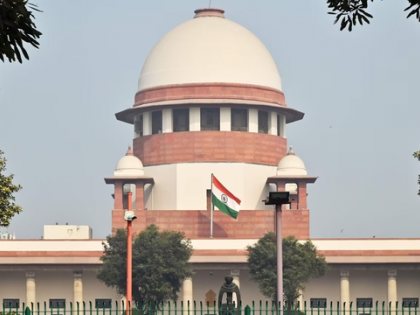
SC issues notice to Kerala on denial of reservation in appointments of public prosecutors, pleaders
New Delhi, Dec 3 The Supreme Court has issued notice to the Kerala government on a plea filed by a lawyer with benchmark disability against a Kerala High Court judgment denying the benefit of reservation under the Rights of Persons with Disabilities (RPwD) Act, 2016, in appointments of additional public prosecutors and government pleaders.
A bench of Justices Vikram Nath and Sandeep Mehta sought the state government’s response within four weeks, after the petitioner side argued that India is a signatory to the UN Convention on the Rights of Persons with Disabilities (2006) and that Parliament’s 2016 law implementing the Convention overrides Kerala’s 1978 Rules governing the appointment of law officers.
Appearing for the petitioner, advocate Abhilash M R, submitted that Section 34 of the RPwD Act is mandatory, requiring not less than four per cent reservation in every government establishment for persons with benchmark disabilities, without making any distinction between permanent, temporary, or contractual posts.
On April 3, the Kerala High Court had dismissed the petitioner’s writ appeal, holding that appointments of additional government pleaders and additional public prosecutors under the Kerala Government Law Officers (Appointment and Conditions of Service) Rules, 1978 were not appointments to a "cadre" but contractual engagements made at the "pleasure of the Government", which is entitled to select the "best advocates" to represent it in legal proceedings.
The Kerala High Court held that such posts were not "civil posts" and hence reservation under Section 34 of the 2016 Act could not apply.
The special leave petition (SLP) before the Supreme Court assails this reasoning as "perverse and contrary to the object of the 2016 Act", contending that the Kerala High Court "wrongly equated ‘cadre strength’ with permanent posts" and ignored statutory definitions.
It added that the 2016 Act, enacted to give effect to the UN Convention, is beneficial legislation intended to secure inclusion and equal opportunity. "The High Court has adopted a narrow and erroneous interpretation of Section 34 of the Rights of Persons with Disabilities Act, 2016, by holding that reservation is not applicable to the posts of 13 Government Pleaders and Public Prosecutors on the ground that such posts are not permanent. [T]he requirement of reservation does not depend on the permanency of posts," the plea contended, adding the doctrine of "client’s choice" cannot override constitutional and statutory mandates.
Disclaimer: This post has been auto-published from an agency feed without any modifications to the text and has not been reviewed by an editor
Open in app