
Srinagar freezes at season’s coldest night at minus 6 as snowfall eludes Kashmir plains
By IANS | Updated: January 9, 2026 10:05 IST2026-01-09T10:04:32+5:302026-01-09T10:05:07+5:30



Srinagar, Jan 9 The Minimum temperature dropped further across Jammu and Kashmir on Friday as Srinagar city recorded ...
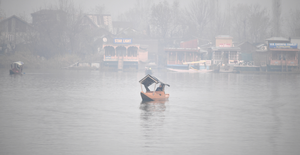
Srinagar freezes at season’s coldest night at minus 6 as snowfall eludes Kashmir plains
Srinagar, Jan 9 The Minimum temperature dropped further across Jammu and Kashmir on Friday as Srinagar city recorded the coldest night of the season so far at minus 6 degrees Celsius.
Srinagar city virtually froze with minus 6 as water taps, road puddles and shallow water bodies froze in the Valley due to very low night temperatures.
The gap between the maximum and the minimum temperature has also narrowed down as Srinagar recorded 11.2 degrees as the maximum temperature on Thursday.
The Meteorological (MeT) Department has forecast generally cold, dry weather till January 20, with little chances of rain/snow during this period, except for some isolated downpour in the higher reaches.
The continued dry spell has raised alarm across J&K as all the water bodies on which agriculture, horticulture and drinking water needs are based in turn depend on heavy snowfall during the ongoing 40-day long period of harsh winter cold called the ‘Chillai Kalan’.
This crucial 40-day-long period is already halfway through, and the plains of the Valley are yet to witness this season’s first snowfall.
Chillai Kalan ends on January 30. Snowfall in February and March is of little consequence as it melts quickly and does not help replenish the perennial water reservoirs in the mountains.
Gulmarg ski resort had minus 7.2 degrees Celsius, and Pahalgam minus 7.6 as a minimum temperature.
Jammu city had 5.6 degrees Celsius, Katra town 3.5, Batote 1, Banihal minus 0.9 and Bhaderwah minus 3.4 as the night’s lowest temperature.
Hospitals and clinics of Pulmonologists and cardiologists are witnessing a heavy rush of patients as chest and heart-related diseases are also on the rise due to cold, dry weather.
People with a history of chest and heart-related ailments have been advised extra care by the doctors, and such vulnerable people have been advised not to venture out of their homes in extreme cold wave conditions.
Disclaimer: This post has been auto-published from an agency feed without any modifications to the text and has not been reviewed by an editor
Open in app