
India must accelerate deep manufacturing to build resilience against tariffs and export pressure: GTRI
By ANI | Updated: December 24, 2025 19:00 IST2025-12-24T18:58:18+5:302025-12-24T19:00:04+5:30



New Delhi [India], December 24 : Deep manufacturing must become India's core economic strategy over the next five years ...
India must accelerate deep manufacturing to build resilience against tariffs and export pressure: GTRI
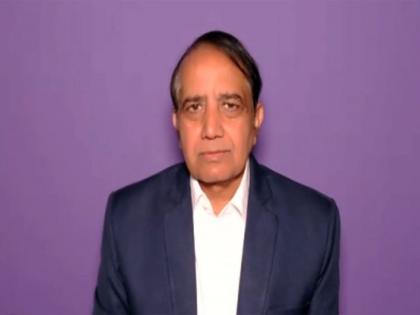
New Delhi [India], December 24 : Deep manufacturing must become India's core economic strategy over the next five years to sustain growth, boost exports and navigate an increasingly protectionist global trade environment, economic think tank Global Trade Research Initiative (GTRI) Founder Ajay Srivastava toldon Wednesday.
"Deep manufacturing means more employment. That means more equitable growth and more exports. Just export growth through deep manufacturing is the panacea for the country. It should be the mantra for the country for the next five years," Srivastava said in an exclusive interview with ANI.
He said the best approach is to focus inward over the next half-decade and promote deep manufacturing in the country.
"We have the capability to make almost every product, but we are not making most of them... Recall how China did it," he said. "By focusing on manufacturing... they could sell to the whole world. India has to follow the same path, he added.
Srivastava said India's near-term growth outlook remains strong despite pressure on exports. "I think 8.2% is too good a number," he said, referring to last quarter's GDP growth. "Even if you are able to match this, that will be very nice because exports account for about 20% of our GDP and there's lot of international pressure on the exports."
For FY26, he expects overall growth to remain robust. "I think it should be something between 7.6 and 8.2," he said, adding that growth would be higher than last year. "The domestic economy is working fine. The GDP numbers are telling; low inflation numbers are telling. The only pressure on the GDP will be the pressure on the export side."
That export pressure, he said, is largely driven by global protectionism, particularly from the United States. "The standoff is basically because of one country and one president, Mr. Trump from the USA," Srivastava said. Trump is imposing illegal reciprocal tariffs on almost all countries, and he's unhappy with India.
He said the US has imposed "the highest tariffs of 50% on India," adding that "the US is unsettling the international trade scenario."
These tariffs have also slowed the China-plus-one strategy. "Everybody understood that China is making 80% of the world's laptops, and 80% of the world's mobile phones," he said. "But because of US high tariffs, the China plus one strategy has now slowed down, because now there are more tariffs in the US on India compared to China."
Relocations could pick up again, he said, once trade tensions ease. "The moment we have a deal with the US, we'll see more of the relocations," he said.
He said India is pursuing trade agreements to counter these challenges. Negotiations with the European Union, which began in 2007, are now progressing more quickly.
"We are told that politically it's put on a fast track from both sides and we will soon see it concluding," he said, estimating a timeline of six months.
Regarding recent free trade agreements with Oman and New Zealand, he said they are strategic rather than volume-driven. "Trade with Oman and New Zealand is around USD 2 billion each," he said. "So they're more of a strategic FTA than the trade FTA."
He said Indian MSMEs face hurdles in fully benefiting from trade opportunities. MSMEs receive the same level of institutional support as large firms, but they need working capital assistance more than large firms, Shrivastav said. "Only those MSMEs will do well who focus on enhancing their product quality, reducing costs all the time."
On global finance, he said de-dollarisation trends are being driven by the US actions. "US is responsible for any efforts on de-dollarisation," he said, citing restrictions on access to the SWIFT system. On BRICS, he added, "It's a loose compilation of countries and its agenda is largely driven by China. India subscribes to its limited agenda."
Currency pressures, he said, are also externally driven. "Large part of the depreciation, the ownership rests with how the US tweaks its interest rates," Srivastava said, though stronger exports would ease pressure on the rupee.
He said global uncertainty has also boosted gold demand. "Whenever the dollar is weak or global uncertainties are more... they start buying metals, especially gold," he said.
Disclaimer: This post has been auto-published from an agency feed without any modifications to the text and has not been reviewed by an editor
Open in app