
Despite bad weather, China makes hay in 2025
By ANI | Updated: December 23, 2025 08:10 IST2025-12-23T08:05:49+5:302025-12-23T08:10:05+5:30



Hong Kong, December 23 : China has encountered turbulence in recent years, especially since unleashing COVID-19. However, the year ...
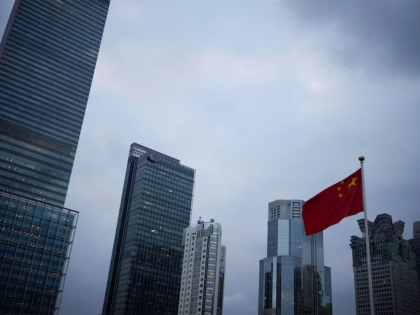
Despite bad weather, China makes hay in 2025
Hong Kong, December 23 : China has encountered turbulence in recent years, especially since unleashing COVID-19. However, the year 2025 appeared to be a better one for Chairman Xi Jinping and the Chinese Communist Party (CCP). Much of this can be put down to the world facing tumult, to which President Donald Trump contributed.
Trump was inaugurated on January 20, 2025, but he soon upset many allies with his invocation of tariffs on those far and near, and criticised European nations.
Trump shamefully berated Ukrainian leader Volodymyr Zelenskyy and at times seemed more interested in honoring Vladimir Putin. Despite his promises, he has also failed to slow down Russia's invasion of Ukraine.
Furthermore, Trump oftentimes seems only to be interested in making money from China, such as his shortsighted permission for Nvidia to sell H200 artificial intelligence computer chips.
Whilst Trump was busy trampling on people's toes, Xi has been presenting himself as a responsible statesman, and China as a power for good in the world.
Xi is targeting the so-called Global South, as he criticises the US for disrupting the international order, and proclaims itself as a champion of free trade, development assistance and international law.
Yet those manoeuvres have belied the truth, as China continues its destabilising actions unabated. Nonetheless, with the rest of the world preoccupied by Trump's antics and a conflict in Gaza and Ukraine, China has been making hay.
In its "2025 Annual Report to Congress", the US-China Economic and Security Review Commission noted, "General Secretary of the CCP Xi Jinping has persisted in challenging US global leadership and asserting China's position on the world stage..."
Of course, Xi has been aided and abetted by Trump's erratic behaviour. Instead of pursuing an integrated, comprehensive campaign against China, Trump's relations have been characterised by missteps.
The American report noted, "Beijing has continued its efforts to construct an alternative world order with itself at the centre - symbolised most powerfully in 2025 by images of the leaders of Russia, North Korea, Iran and about 20 other mostly authoritarian countries gathered behind Xi Jinping at a military parade in Beijing commemorating China's victory in World War Two."
Indeed, the acme for the People's Liberation Army (PLA) was its spectacular military parade in Tiananmen Square on 3 September 2025. The military showed a plethora of new equipment, including a bewildering array of missiles.
Importantly, China is expanding its considerable inventory of nuclear warheads. It displayed no fewer than three types of ground-based intercontinental ballistic missiles in the parade, as well as submarine-launched and air-launched nuclear-tipped missiles.
Sam Roggeveen, Program Director of the International Security Program at the Lowy Institute in Australia, assessed that 2025 was a year of major revelations: "In fact, I cannot recall a more dramatic year in my time as a PLA watcher."
Apart from the gradual dissemination of more information about China's prototypical sixth-generation fighters, including a tailless one, Roggeveen highlighted these things.
"There's so much to highlight: the commissioning of China's third aircraft carrier, the apparently excellent performance of Chinese weapons in Pakistan's aerial skirmish with India over Kashmir, evidence that China is building a military headquarters outside Beijing roughly ten times the size of the Pentagon, countless new combat drone designs, the 'invasion barges' for a Taiwan amphibious landing, the Beijing military parade, the launch of a new [Type 076] amphibious vessel for which there is no global equivalent, strong photographic indications of a fourth aircraft carrier under construction (nuclear-powered and perhaps the largest warship ever built), and...the first images of a new class of military transport aircraft. This list is not exhaustive."
Roggeveen acknowledged that China still has capability gaps - such as anti-submarine warfare - and areas where it trails the US and Russia (e.g. in nuclear-powered submarines and aircraft engines). However, "China is no longer an imitator or 'fast follower' in military technology. It is a leader."
The PLA is a potent tool in the hands of the CCP, as made evident by its daily harassment of Taiwan via sea and aerial patrols. A Chinese task group also performed unprecedented naval gunnery in the Tasman Sea in February. While this action was not illegal, China intended to send a message to Australasia that it can go where it pleases.
As the US-China Economic and Security Review Commission report pointed out: "While claiming to be a source of international stability, China has continued to threaten global security by undertaking gray-zone activities in the Indo-Pacific and around the world.
China routinely engages in provocative military manoeuvres near Taiwan and in the South and East China Seas, and has sabotaged critical undersea
communications cables near Taiwan and in the Baltic Sea, and has escalated cyberattacks on the United States."
Not only has China intensified aggressive actions and words against Taiwan, but it has done the same against Manila in the South China Sea and harassed Japan near the Senkaku Islands. Its gray zone tactics assert territorial sovereignty, and Beijing uses "lawfare" to back up its claims.
The US commission's report also noted, "Beyond its own borders, Beijing has continued to stoke violence and instability by supplying dual-use goods to Russia and otherwise helping sustain its war against Ukraine, funding Iran and its terrorist proxies in the Middle East, and intensifying cyberattacks on the United States and countries around the world."
The US government also accused China of providing North Korea with diplomatic cover and material support that advances its cyber and weapons programs. Taiwan clearly remains a flashpoint, with Beijing incensed by US approval of a massive USD 11.1 billion arms package for Taiwan that was announced on 17 December 2025.
Lyle Morris, Senior Fellow for Foreign Policy and National Security at the US-based Asia Society Policy Institute's (ASPI) Centre for China Analysis, posited, "The year 2026 will be pivotal for Taiwan. With new leaders elected in Washington and Taipei in 2024, prospects for peace in the Taiwan Strait will likely hinge on the ever-changing political considerations of how to maintain the precarious status quo between China, Taiwan and the United States."
Morris added, "In 2026, US President Donald Trump and Taiwanese President Lai Ching-te will each have to confront the challenge of maintaining the peace while balancing domestic considerations that may distract from this central goal. Meanwhile, as China's President Xi Jinping continues to pursue peaceful reunification between mainland China and Taiwan, there are indicators that China's population may be losing patience with nonmilitary approaches to achieving Xi's goal."
China confidently threw its weight around beyond its shores in 2025, yet the CCP sought to intensify control at home too. The Commission's annual report explained: "China's efforts to undercut US credibility and advance its own interests overseas have also been supported by its approach to domestic governance. Over the past year, China has deepened its anti-corruption campaign with the aim of quashing internal dissent, forged ahead with its military modernisation efforts, and continued its longstanding efforts to control religious institutions it sees as fueling separatism and undermining party rule."
The authors assessed, "Considered in the aggregate, these actions reflect Beijing's continued rapid preparations for the possibility of conflict and its systematic efforts to erode US deterrence across the military, economic, technological, cyber and diplomatic domains."
Xi's priorities are exercising tight control over the CCP, ensuring national security and boosting technological self-reliance. He believes these are key for China's future prosperity. Xi values loyalty above all else, but that means Chinese leaders are not necessarily there because of talent. His underlings are afraid to put a foot wrong, so Xi's centralised system limits innovation and dynamism.
Indeed, promotion of the elite depends primarily upon their alignment with Xi's policies. The CCP's top echelons have endured a strict anti-graft campaign, with record numbers of arrests and detentions.
Naturally, there is tension between loyalty and governance, especially as a new generation of leaders - particularly those born in the 1970s - will rise to the fore at the 21st Party Congress in 2027-28. In an end-of-year assessment by ASPI, experts said, "In practice, Xi's policies have led to a decline in governance capability, as evidenced by economic sluggishness, mismanagement of public health crises, and the intensification of international relations."
Elsewhere, the US-China Economic and Security Review Commission stated, "China's economic system is under serious strain. High debt levels and eroding fiscal capacity have constrained Chinese officials' means to address the domestic slowdown without more serious structural reform, which remains unlikely for political reasons.
The result is increasingly a two-speed economy, whereby broader economic growth remains under substantial pressure while priority areas for the party, such as advanced manufacturing, continue to see plentiful policy support and access to capital.
Domestic consumption remains tepid amid mounting concerns over stagnant wages, unemployment, high household debt and a weak social safety net."
Growth has slowed in the Chinese economy, local governments are heavily indebted, and the property sector remains fragile. The workforce is also shrinking as the birth rate remains low. Levels of business and consumer confidence have plummeted, international investment is waning, and the US has imposed export controls.
Domestic consumption amounted to 41 per cent in 2023, far below the US's level of 69 per cent. That means China is still dependent on exports. ASPI noted, "Slumping investment returns, mounting bad debt and escalating trade tensions have pushed Beijing to renew its efforts to pivot toward consumption. The fundamental question is not whether consumption-led growth is economically desirable or a priority for China's leadership, but whether Beijing possesses the political resolve to accept the 2-3 per cent annual GDP growth that genuine rebalancing would require."
This restructuring is important because a lack of consumer-led growth will mean social stability is increasingly difficult to maintain. Next year, China may either reinforce or abandon its consumption strategy, so this bears watching.
Furthermore, inequality runs rampant in China, which is at odds with its touted socialist ideals. China has more billionaires than the US, though youth unemployment is at 20 per cent. ASPI highlighted three strategic tensions that define the evolving state-private sector relationship: openness versus control, dependence versus mistrust, and political will versus execution.
There is thus a "golden goose" dilemma. Those entrepreneurs who generated China's technological boom cannot be trusted by the CCP, and the party is trying to rein them in so they do not accrue too much power.
Despite these challenges, China's economy is more resilient and self-reliant now. China will release its 15th Five-Year Plan next year, covering the 2026-30 period. The 21st Party Congress is scheduled for 2027, and Xi will wish to present himself in the best light.
This legitimacy is vital, since Xi has broken norms and set himself up to reign over China indefinitely. In April 2025, the USA and China experienced uncontrolled decoupling as tariffs were imposed by both sides. Afterwards, the two were able to negotiate a de-escalation to reach "strategic stability", as the US described it. That stability was threatened by a couple of flare-ups in 2025, and Xi forced Trump back to the negotiating table with his threat to constrict the flow of rare-earth elements.
Rather than desperation, this showed Xi's confidence vis-a-vis Trump. Nonetheless, uncertainty is ever-present as Xi manages rolling tariff truces imposed by Trump.
China also ostracised Japan late in 2025 after Beijing took exception to comments made by Japanese Prime Minister Sanae Takaichi. While such moves play well at home, they do not garner plaudits overseas. Indeed, China has scored its own goals and damaged its image through its "wolf warrior" diplomacy, and global surveys generally show China is falling out of favour.
Unlike the US's knee-jerk policies, China has a coordinated strategy to prepare itself for the possibility of potential conflict. Simultaneously, the Chinese government is seeking to erode US deterrence and harm the resilience of American security networks with allies.
At the heart of Xi's thinking is that the East is rising and the West is declining. He believes China will eventually outpace the US and replace it as the world's preeminent power. Certainly, he made some progress towards this goal in 2025.
Disclaimer: This post has been auto-published from an agency feed without any modifications to the text and has not been reviewed by an editor
Open in app