
Iran-US talks may resume in Islamabad with JD Vance likely to lead the delegation: Reports
By ANI | Updated: April 15, 2026 06:25 IST2026-04-15T11:53:49+5:302026-04-15T06:25:14+5:30



Washington DC [US], April 15 : The United States is weighing the possibility of holding a second round of ...
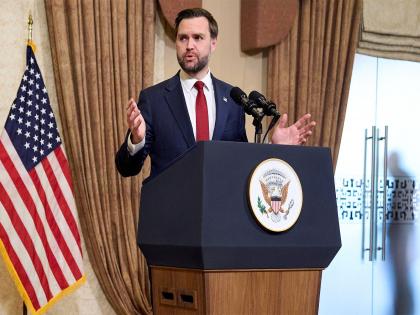
Iran-US talks may resume in Islamabad with JD Vance likely to lead the delegation: Reports
Washington DC [US], April 15 : The United States is weighing the possibility of holding a second round of negotiations with Iran, with Vice President JD Vance likely to lead the American delegation and Pakistan's capital, Islamabad, emerging as a probable venue, CNN reported.
Trump's special envoy Steve Witkoff and his son-in-law Jared Kushner, who have headed diplomatic talks since before the war began, are also expected to attend any possible second meeting, the sources said, quoted by CNN.
Trump has entrusted his three senior advisers with the responsibility of exploring a diplomatic pathway to end the ongoing hostilities. Vance, Witkoff and Kushner have remained in contact with Iranian officials and intermediaries following a recent 21-hour round of discussions, as part of efforts to move closer to a potential agreement. However, officials are still deliberating over the specifics of a second round, and no final decision has been taken.
"Future talks are under discussion, but nothing has been scheduled at this time," a US official said, quoted by CNN.
The development comes after former US President Donald Trump indicated that momentum was building for another round of talks. In a telephonic interview with The New York Post, he said that "something could be happening" over the next two days in Pakistan.
Trump said the ongoing discussions were "happening, but, you know, a little bit slow," while suggesting that a second round of direct negotiations aimed at ending the ongoing seven-week conflict would likely be held in Europe.
The remarks by Trump came after reports had circulated online purportedly claiming that the location for negotiations was being changed.
However, shortly after, Trump called back with a revised update.
"You should stay there, really, because something could be happening over the next two days, and we're more inclined to go there," he said of Islamabad. "It's more likely, you know why? Because the field marshal is doing a great job."
He was referring to Pakistan's Field Marshal Gen. Asim Munir, with whom he reportedly developed a rapport last year during heightened tensions involving India and Pakistan, which later de-escalated after a brief four-day conflict that the US helped mediate.
"He's fantastic, and therefore it's more likely that we go back there," he said. "Why should we go to some country that has nothing to do with it?"
"I just think he's a great guy. That guy. The field marshal. You know he ended the war with India, saved 30 million people," he added.
Trump also clarified that he would not personally participate in the proposed second round of negotiations and did not name who would represent the United States.
Meanwhile, he expressed dissatisfaction over reports suggesting that Washington had sought Iran's agreement to pause uranium enrichment for at least two decades following unsuccessful talks over the weekend.
"I've been saying they can't have nuclear weapons", he said, "so I don't like the 20 years."
When asked whether such a long moratorium could help secure a deal, Trump said, "I don't want them [Iran] to feel like they have a win," The New York Post quoted.
On the diplomatic front, retired Pakistani Lt Gen Muhammad Saeed, who is said to be involved in facilitating the talks, stated that Tehran had shown "flexibility" on the contentious issue of uranium enrichment, which had repeatedly stalled negotiations.
However, Trump cautioned that Iran would need to present any compromise in a politically acceptable manner domestically.
"Iran has to be able to take something back to its people that doesn't look like a surrender," said Saeed, describing the Islamic Republic's need to frame any compromise as being made "in the golden trust of the people."
Contrasting this, Mohammad Marandi, who accompanied the Iranian delegation in Islamabad, adopted a firm stance, stating, "A blockade won't change Iran's position," and adding that "ending enrichment will not be accepted," The New York Post reported.
Disclaimer: This post has been auto-published from an agency feed without any modifications to the text and has not been reviewed by an editor
Open in app