
Khaleda Zia, Bangladesh's 3-Time Prime Minister, Dies At 80 After Prolonged Illness In Dhaka
By Lokmat Times Desk | Updated: December 30, 2025 07:49 IST2025-12-30T07:49:02+5:302025-12-30T07:49:36+5:30


Begum Khaleda Zia, Bangladesh's first woman prime minister, has died of prolonged illness while under treatment at Dhaka's Apollo ...
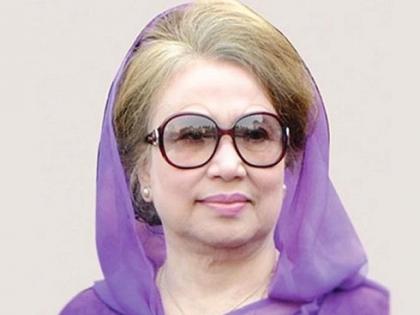
Khaleda Zia, Bangladesh's 3-Time Prime Minister, Dies At 80 After Prolonged Illness In Dhaka
Begum Khaleda Zia, Bangladesh's first woman prime minister, has died of prolonged illness while under treatment at Dhaka's Apollo Hospital. She was 80. Ex-prime minister and the chairperson of the Bangladesh Nationalist Party (BNP) died this morning at 6 am, according to a statement issued by her party on Facebook. She was under treatment for the past 36 days since being admitted on November 23 with infections in her heart and lungs. She was also suffering from pneumonia, according to the Bangladeshi daily The Daily Star. "The BNP Chairperson and former prime minister, the national leader Begum Khaleda Zia, passed away today at 6:00 am, just after the Fajr (dawn) prayer," the party said in a statement.
"We pray for the forgiveness of her soul and request everyone to offer prayers for her departed soul," it added. Zia, the first female prime minister of Bangladesh, had long been battling multiple health complications, including liver cirrhosis, arthritis, diabetes, and chronic issues affecting her kidneys, lungs, heart, and eyes. Her treatment was being overseen by specialists from Bangladesh, the UK, the US, China, and Australia.She left behind her elder son Tarique, his wife Zubaida Rahman, and their daughter Zaima Rahman. Tarique Rahman returned to Bangladesh on December 25 after 17 years in exile. Zia's younger son, Arafat Rahman Koko, died a few years ago in Malaysia.
Zia, the three-time prime minister of Bangladesh, has left a strong political legacy that formally started after she assumed the office through popular vote in the 1991 national election. She went on to introduce the parliamentary form of government and caretaker government system in Bangladesh to oversee a free and fair election. Born in Jalpaiguri, British India (now West Bengal), in 1945, Khaleda's family moved to Dinajpur, East Bengal (now Bangladesh), after the partition in 1947. Her father, Iskandar Mazumder, was a businessman, and her mother, Tayeba Mazumder, was a housewife. Nicknamed "Putul", she was the second among three sisters and two brothers. After moving to East Pakistan, Zia attended Dinajpur Missionary School and later did her matriculation at Dinajpur Girls' School in 1960. She married Ziaur Rahman, then a captain in the Pakistan army, in 1960 and continued her education at Surendranath College of Dinajpur until 1965, before she moved to West Pakistan to join her husband. In 1971, when Bangladesh's Liberation War started, Ziaur Rahman revolted and fought for the independent nation.
Ziaur Rahman was assassinated on May 30, 1981. After his death, his BNP faced a serious crisis. To keep the party together, Khaleda Zia, who was never in politics, joined BNP and became its vice-president on January 12, 1984. She was elected the party's chairperson on May 10, 1984. Under the leadership of Khaleda Zia, BNP formed a 7-party alliance in 1983 and launched a movement against the autocratic regime of Ershad.
Open in app
