
Pakistan staring at health emergency but govt's monitoring remains inconsistent: Report
By IANS | Updated: May 5, 2026 19:35 IST2026-05-05T19:32:39+5:302026-05-05T19:35:23+5:30



Islamabad, May 5 A public health emergency is unfolding in Pakistan as a recent joint study by the ...
Pakistan staring at health emergency but govt's monitoring remains inconsistent: Report
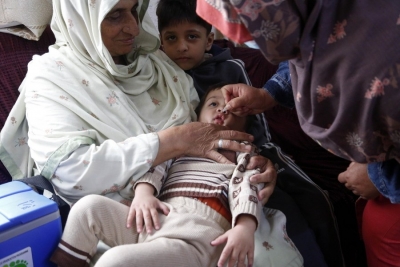
Islamabad, May 5 A public health emergency is unfolding in Pakistan as a recent joint study by the United Nations International Children's Emergency Fund (UNICEF) and Pakistan's Ministry of National Health Services has revealed that four in every 10 children aged 12 to 36 months in high-risk urban areas carry lead in their blood. The cities surveyed in the report, including Lahore, Karachi, Peshawar, Quetta and Rawalpindi, are not remote or marginal spaces but economic and population centres, a report has stated.
"Yet within them, entire clusters of children are being exposed to a toxic metal that damages the brain, stunts growth, weakens immunity and irreversibly alters cognitive development. In Hattar, Haripur, nearly nine out of 10 children tested showed elevated lead levels. The science is unequivocal. There is no safe level of lead exposure for children. The damage – reduced IQ, impaired memory, behavioural disorders – is permanent," an editorial in leading Pakistani daily 'The News International' mentioned.
According to the study, children absorb lead at up to five times the rate of adults. The youngest and most vulnerable are the most affected due to this regulatory failure. The sources of exposure are not rare or extraordinary but are common in everyday life like industrial emissions, informal battery recycling, contaminated food and spices, lead-based paints and traditional cosmetics.
Pakistan's government has said that the issue is a "national public health priority." However, Pakistan must take visible, measurable action to address the issue. For a long time, environmental health is considered a secondary concern in Pakistan. The data in this study upends Pakistan government's wrong decision, The News International stated. The lead exposure is also expected to have economic impact on Pakistan.
Lead exposure is estimated to cost Pakistan between 6.0 and 8.0 per cent of its GDP annually, which is eroding country's human capital. Despite the scale of the problem, Pakistan government's implementation remains patchy and monitoring inconsistent. Regulations exist in Pakistan, however, they are unevenly applied.
"What is needed now is not another study, but a sustained, coordinated response. This must include stricter enforcement of industrial emissions standards, formalisation and regulation of recycling sectors, bans on lead-based consumer products, routine screening of children in high-risk areas, and a nationwide awareness campaign that informs parents of the risks," it mentioned further.
Disclaimer: This post has been auto-published from an agency feed without any modifications to the text and has not been reviewed by an editor
Open in app