
Standard practice to hire lobbying firms to strengthen their outreach: MEA on FARA filings
By ANI | Updated: January 9, 2026 18:30 IST2026-01-09T23:56:29+5:302026-01-09T18:30:04+5:30



New Delhi [India], January 9 : The Ministry of External Affairs (MEA) on Friday stated that hiring lobbying firms ...
Standard practice to hire lobbying firms to strengthen their outreach: MEA on FARA filings
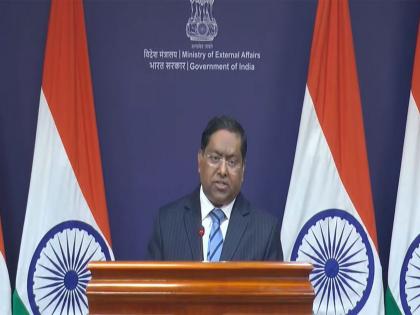
New Delhi [India], January 9 : The Ministry of External Affairs (MEA) on Friday stated that hiring lobbying firms is a "standard practice" for countries, embassies, business establishments, and private organisations to strengthen outreach with stakeholders, in response to queries on recent filings under the Foreign Agents Registration Act (FARA) in the United States, which mentioned the Indian side engaging with its US counterparts through such firms.
Speaking at a weekly press briefing, MEA spokesperson Randhir Jaiswal emphasised that this has been a longstanding norm, noting that India has been hiring such lobbying firms since the 1950s.
"This is a normal practice in Washington DC and in the United States of America: that countries, embassies, business establishments and private organisations hire lobbyists and consultants. We, on our part, the Indian mission, have been hiring such lobbying firms since the 1950s. The details of all these firms are available in the public domain. I would urge you to get to know more details of them and to look them up on the relevant website," Jaiswal said.
"It is a standard practice for embassies and business organisations and private organisations to have lobbying firms to strengthen their outreach, and so is the case with us," he added.
The MEA's remarks followed reports that India has been contacting Washington for diplomatic engagement and outreach through such lobbying firms, as revealed by filings these firms made under the US Foreign Agents Registration Act (FARA) with the US Department of Justice.
Meanwhile, the FARA filings also revealed that India's swift and precise military action during the May 2025 conflict against Pakistan in Operation Sindoor led Islamabad to use such lobbying firms to contact the US in order to secure the FATF whitelist, as India destroyed nine terror camps in Pakistan and Pakistan-occupied Jammu and Kashmir (PoJK) in retaliation for the April 22 Pahalgam terror attack.
The FARA disclosures lay bare Pakistan's extensive lobbying efforts in Washington, highlighting its attempts to shield itself from international accountability even as India decisively targeted terror infrastructure in PoJK and Pakistan.
In those disclosures, it was revealed that Islamabad launched an aggressive lobbying campaign in Washington, repeatedly reaching out to the American establishment.
According to documents submitted and accessed, Pakistan sought US support to maintain the Financial Action Task Force's (FATF) continued whitelisting shortly after Operation Sindoor.
The documents revealed that Islamabad conveyed its concerns and appeals through its registered lobbyists, stressing its political commitment to the international community and requesting US assistance ahead of the FATF plenary scheduled for June 2025.
According to documents obtained, Pakistan used its lobbying firm to contact Washington numerous times via email, phone, and in-person meetings under the agenda of "US-Islamic Republic of Pakistan Bilateral Relations".
Pakistan also contacted another firm, which it used to appeal to the US to secure continued inclusion on the FATF whitelist after Operation Sindoor.
In October 2022, Islamabad was removed from the Financial Action Task Force (FATF) grey list, the global watchdog on money laundering and terrorist financing, which restricts a country's access to international loans. Pakistan was placed on the grey list in 2018.
According to the documents, Islamabad assured that it remains committed to completing all residual referrals agreed with by FATF and expressed readiness for an open bilateral exchange of information to address what it termed "five residual items.
Disclaimer: This post has been auto-published from an agency feed without any modifications to the text and has not been reviewed by an editor
Open in app