
UN relief chief warns of severe humanitarian crisis in Afghanistan
By IANS | Updated: December 11, 2025 08:40 IST2025-12-11T08:37:35+5:302025-12-11T08:40:16+5:30


United Nations, Dec 11 UN Under-Secretary-General for Humanitarian Affairs and Emergency Relief Coordinator Tom Fletcher warned of a ...
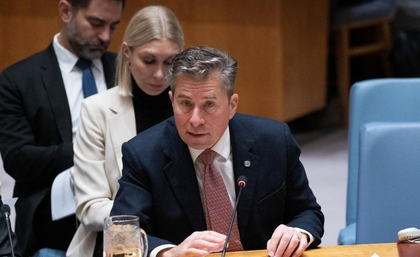
UN relief chief warns of severe humanitarian crisis in Afghanistan
United Nations, Dec 11 UN Under-Secretary-General for Humanitarian Affairs and Emergency Relief Coordinator Tom Fletcher warned of a severe humanitarian crisis in Afghanistan.
Overlapping shocks, restrictive policies affecting women and girls, the longstanding impact of decades of conflict and chronic poverty, as well as massive funding cuts this year, have left Afghanistan in a severe humanitarian crisis, Fletcher told the UN Security Council in a briefing on Wednesday.
Nearly 22 million people in Afghanistan will need help in 2026, making it the world's third-largest humanitarian crisis, only after Sudan and Yemen, he said.
"Our ask is $1.7 billion to target 17.5 million people. But in response to the funding reality, we have further hyper-prioritised our plan to target 3.9 million people in most urgent need of life-saving help," said Fletcher.
For the first time in four years, the number of people facing hunger has gone up in Afghanistan, now reaching 17.4 million. And essential services -- already insufficient and uneven across the country -- are stretched to a breaking point as Afghan refugees return in record numbers, he noted.
Over 2.6 million Afghans returned in 2025, bringing the number who have returned in the last two years to over 4 million. The situation for those returnees is particularly precarious. Many arrived with few possessions, hosted in already distressed communities and in an economy that cannot provide for them, he said.
Women and children made up 60 per cent of all returnees this year, returning to a country where women and girls are denied opportunities to study, work, and even in some cases, receive health care, he noted.
With 2.5 million Afghans in Pakistan, a large majority of whom have recently seen their legal status revoked, the potential impact of further mass returns is alarming, warned Fletcher.
Despite limited funding, the United Nations and partners have continued to deliver aid as best as they can, he said, adding that the UN Central Emergency Response Fund has released more than 40 million dollars in additional funding.
However, increasing human rights restrictions, particularly on Afghan women staff, have made life for many Afghans ever more difficult, and created extra burdens on the implementation of the world body's humanitarian work, he said.
Humanitarians are working in an incredibly complex environment, with operational, financial and reputational risks, including pressures to amend local beneficiary lists, bureaucratic and administrative impediments, maneuvers to influence staff and contractor selection, restrictions on Afghan women staff, and the potential risk of aid diversion, said Fletcher.
Underfunding has forced service closures and resulted in scaled-back assistance to millions, he said.
This winter is the first in years with almost no international food distribution. As a result, only about 1 million of the most vulnerable people have received food assistance during the lean season in 2025, compared with 5.6 million last year, Xinhua news agency reported.
Some 1.1 million children are missing out on life-saving nutrition as 305 nutrition service delivery points have been closed. With 3.7 million children in need of nutrition, including 1.7 million at risk of death if not treated, the results will be catastrophic, he said.
Up to 422 health facilities were closed in 2025, leaving 3 million people without access to life-saving care, he noted.
"As we look towards 2026, we risk a further contraction of life-saving help -- at a time when food insecurity, health needs, strain on basic services, and protection risks are all rising," warned Fletcher.
Disclaimer: This post has been auto-published from an agency feed without any modifications to the text and has not been reviewed by an editor
Open in app