
Maharashtra Hindi Exam Row: Shiv Sena UBT Alleges ‘Language Imposition’ On State Employees
By Lokmat Times Desk | Updated: May 6, 2026 16:20 IST2026-05-06T16:20:26+5:302026-05-06T16:20:32+5:30



A fresh language controversy has emerged in Maharashtra after the state government announced plans to hold Hindi proficiency examinations ...
Maharashtra Hindi Exam Row: Shiv Sena UBT Alleges ‘Language Imposition’ On State Employees
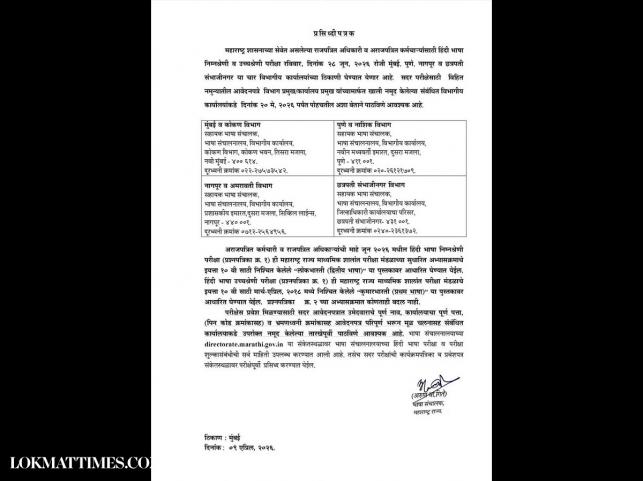
A fresh language controversy has emerged in Maharashtra after the state government announced plans to hold Hindi proficiency examinations for government employees. The notification, issued by the state language department, has triggered strong political reactions and revived debates around linguistic identity and administrative priorities in the state. According to the circular, Hindi language tests for gazetted as well as non-gazetted officers are scheduled to take place on June 28, 2026. The examinations will be conducted at divisional centres located in Mumbai, Pune, Nagpur and Chhatrapati Sambhajinagar. Although similar exams were reportedly organised earlier too, the latest announcement has now become a major political flashpoint across Maharashtra.
The Shiv Sena (UBT) strongly criticised the government’s decision, alleging that the move amounts to promoting Hindi at the cost of Marathi, which is Maharashtra’s official language. The party questioned the necessity of conducting Hindi exams for state employees when administrative communication is primarily carried out in Marathi. Sena UBT leaders argued that the policy sends a conflicting message, especially after Marathi was granted the status of a classical language. According to the party, Maharashtra’s cultural identity and administrative foundation are deeply connected to Marathi, and any attempt to prioritise Hindi could weaken the state’s linguistic heritage and create unnecessary concerns among Marathi-speaking citizens.
महाराष्ट्र शासनाच्या सेवेत कार्यरत अधिकारी आणि कर्मचाऱ्यांसाठी हिंदी भाषा प्रवीणतेची परीक्षा आयोजित करण्याचा निर्णय अनाकलनीय आहे. महाराष्ट्राची ओळख ही मराठी भाषा आणि संस्कृतीमुळे आहे. राज्यातील कर्मचाऱ्यांवर हिंदीची सक्ती करण्याचा प्रयत्न नेमका कोणाच्या हितासाठी केला जात आहे, असा… pic.twitter.com/UVOyxUeQUs
— ShivSena - शिवसेना Uddhav Balasaheb Thackeray (@ShivSenaUBT_) May 6, 2026
महाराष्ट्रात शासकीय कर्मचाऱ्यांना
— Dr. Deepak Pawar दीपक पवार (@drdeepakpawar) May 5, 2026
हिंदी भाषा परीक्षेची सक्ती कशासाठी?
महाराष्ट्र राज्याच्या सेवेत असलेल्या राजपत्रित अधिकारी व कर्मचाऱ्यांसाठी हिंदी भाषा निम्न श्रेणी व उच्च श्रेणी परीक्षा दि. २८ जून, २०२६ रोजी राज्याच्या चार विभागीय कार्यालयांत घेण्यात येईल असे राज्य शासनाच्या…
Also Read: Mumbai Teen Died In 2009 Train Accident, Family Awarded Rs 8 Lakh Compensation In 2026
Joining the criticism, Marathi Abhyas Kendra president Dr Deepak Pawar raised questions about whether the state was indirectly making Hindi compulsory for employees. He stated that since government functioning in Maharashtra already operates largely in Marathi, there is little practical need to assess Hindi proficiency. Pawar also pointed out that Hindi is not Maharashtra’s official language and asked whether similar examinations are held in other non-Hindi-speaking states such as Tamil Nadu, Karnataka, Gujarat or West Bengal. Calling the decision unnecessary, he claimed it could waste administrative resources and dilute the importance of Marathi. He demanded immediate withdrawal of the proposal and warned of protests outside the language department if the order is not cancelled.
The issue has rapidly gained momentum online, with social media users and political workers seeking clarification from the Maharashtra government. Several posts tagging Chief Minister Devendra Fadnavis and Deputy Chief Minister Eknath Shinde have demanded an explanation regarding the purpose of the Hindi examinations. Critics continue to question whether the move reflects a broader attempt to increase the use of Hindi within state administration. Despite the growing uproar, the government has not yet released a detailed clarification or official response addressing the objections raised by political parties and language activists. The administration’s next step is expected to be closely monitored as the debate over language policy intensifies across the state.
Open in app