
Future stolen: Chhattisgarh’s Bastar lost decades under Maoist shadow
By IANS | Updated: December 3, 2025 12:40 IST2025-12-03T12:38:49+5:302025-12-03T12:40:10+5:30



New Delhi, Dec 3 A detailed account of the long-term impact of Maoist violence in Chhattisgarh’s Bastar region ...
Future stolen: Chhattisgarh’s Bastar lost decades under Maoist shadow
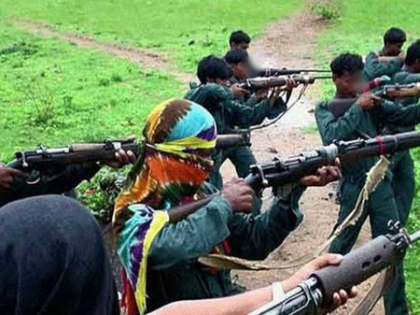
New Delhi, Dec 3 A detailed account of the long-term impact of Maoist violence in Chhattisgarh’s Bastar region has reignited the debate over how insurgency has shaped the social and economic landscape of one of India’s poorest tribal belts.
Nearly two decades of ambushes, extortion, and targeted destruction of public infrastructure left Sukma, Bijapur and Dantewada among the most impoverished districts in the country, even as Maoist influence weakened in recent years.
These insights appear in an opinion piece by Meera S. Joshi, published by India Narrative, which contrasts the popular imagery of global revolutionaries like Che Guevara with the violent legacy attributed to Hidma.
Joshi writes, “There is no charismatic portrait, no mystical aura, no political programme beyond violence… Hidma left behind no cult of admiration, only a trail of blood and one of the worst development records in India.”
The piece traces major attacks linked to Maoist commander Madvi Hidma, who was killed in an encounter on November 18, 2025, and examines how cycles of violence prevented schools, health services, banking systems and markets from functioning normally.
The assessment notes that between 2005 and 2025, more than 1,200 schools were blown up or shut down, over 120 health centres were abandoned, and essential services such as banking, tendu-leaf trading, MGNREGA access and PDS distribution were severely disrupted by Maoist intimidation.
A roll call of incidents cited includes the 2010 Dantewada ambush that killed 76 CRPF personnel, the 2013 Jhiram Ghati attack on a Congress convoy, the 2017 Burkapal and Sukma assaults, and the 2021 Sukma–Bijapur ambush in which 22 security personnel lost their lives. These, the analysis says, formed part of a pattern that crippled governance and development for an entire generation.
Maoist dominance created an “extortion economy” that touched Rs 200–300 crore annually, while blocking even basic welfare delivery. Infant mortality in Sukma, for instance, reached 52 per 1,000 live births, while literacy rates dropped far below national averages.
The narrative sharply criticises what it calls the “urban romanticisation” of insurgency, asserting that admiration for Maoist figures persists mainly among privileged youth far removed from ground realities. “Rebellion has become a lifestyle accessory,” the writer observes, describing how those romanticising violence rarely witness its consequences for teachers, frontline workers or tribal families who navigate mined forest paths daily.
The piece concludes that Maoist violence ultimately harmed the very communities it claimed to represent, arguing that the so-called people’s war “delivered terror and fear” while stalling the region’s path to development.
Disclaimer: This post has been auto-published from an agency feed without any modifications to the text and has not been reviewed by an editor
Open in app