
J&K Police raids 15 locations in Sopore linked to UAPA cases
By IANS | Updated: May 16, 2026 13:35 IST2026-05-16T13:31:02+5:302026-05-16T13:35:13+5:30



Srinagar, May 16 Police in J&K’s Sopore sub-division on Saturday carried out searches at 15 locations in connection ...
J&K Police raids 15 locations in Sopore linked to UAPA cases
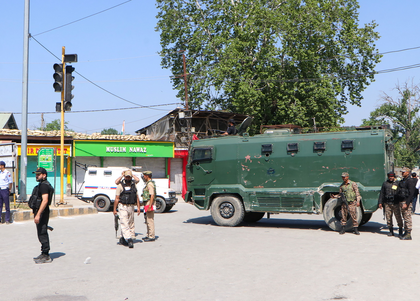
Srinagar, May 16 Police in J&K’s Sopore sub-division on Saturday carried out searches at 15 locations in connection with the Unlawful Activities (Prevention) Act (UAPA) cases linked to the banned Jamaat-e-Islami organisation.
Police said that in Sopore sub-division searches were carried out at over 15 locations across Bomai, Warpora, Sopore and Tarzoo in connection with a UAPA case linked to the banned Jamaat-e-Islami network.
The ban on the Jamaat-e-Islami party was extended by the government of India for another five years, starting from February 2024, declaring it an "unlawful association" under the UAPA.
The organisation is accused of encouraging terrorism and secessionism in J&K. Jamaat was first banned in 2019 and the ban was extended in February 2024 for another five years due to continued activities against national security.
Authorities are actively seizing properties and schools linked to the organisation. Till April 2026, the J&K administration has taken over dozens of schools associated with the Falah-e-Aam Trust, which is linked to the ban.
Police continue to conduct raids and search operations against networks linked to the banned organisation under the UAPA, including recent operations in North Kashmir areas this month.
Despite the ban, members affiliated with the group have shown interest in participating in democratic processes and some formerly associated members contested the 2024 Assembly elections under new banners creating a split within the group, with some members exploring new political paths while others maintain the original stance.
The Ministry of Home Affairs states that the Jamaat is involved in fomenting militancy, supporting anti-India propaganda, and aiming to disrupt the unity and integrity of the country.
The organisation was originally formed to encourage Islamic revival in the region, but was banned due to its role in supporting violent activities and separatism.
The terrorist outfit, Hizbul Mujahideen was formed by youth and senior Jamaat activists as the armed wing of the Jamaat.
The so-called supreme commander of Hizbul Mujahideen, Syed Yusuf Shah alias Syed Sallahuddin, presently based in Pakistan-Occupied-Kashmir (PoK), was a senior Jamaat leader and the party candidate in the 1987 Assembly elections.
Most of the ‘elders’ of the Hizbul Mujahideen were also senior cadre of the Jamaat-e-Islami.
Disclaimer: This post has been auto-published from an agency feed without any modifications to the text and has not been reviewed by an editor
Open in app