
L-G summons Delhi Assembly Winter Session from January 5, 2026
By IANS | Updated: December 26, 2025 16:35 IST2025-12-26T16:33:18+5:302025-12-26T16:35:12+5:30


New Delhi, Dec 26 The Delhi Assembly's Winter Session will begin on January 5, 2026, with Lt Governor ...
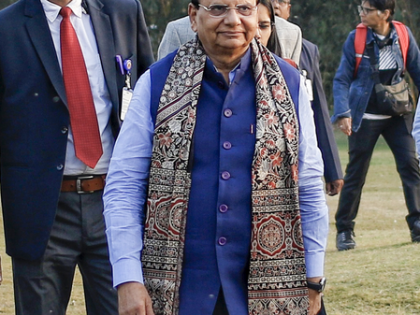
L-G summons Delhi Assembly Winter Session from January 5, 2026
New Delhi, Dec 26 The Delhi Assembly's Winter Session will begin on January 5, 2026, with Lt Governor (L-G) V.K. Saxena issuing the summoning order for the sitting, an official said on Friday.
In the order, the L-G said: "In exercise of the powers conferred upon me by Section 6(1) of the Government of National Capital Territory of Delhi Act, 1991 (Central Act No. 1 of 1992), I hereby summon the Fourth Session (Winter Session) of the Eighth Legislative Assembly of the National Capital Territory of Delhi to meet at the Assembly Hall, Old Secretariat, Delhi-110054, on Monday, January 5, 2026, at 2.00 p.m."
Legislative Assembly Secretary Ranjeet Singh on Friday shared a copy of the L-G's summons and informed all MLAs and officials about the date for the commencement of the Winter Session.
The session is expected to last at least till January 8 and may be extended by Speaker Vijender Gupta if the pending business so requires.
Delhi government sources said that apart from discussions on Action Taken Reports related to the Comptroller and Auditor General (CAG) reports, the session may also witness deliberations on the government’s initiatives to combat pollution.
The modalities of the Electric Vehicle (EV) Policy may also come up for discussion, apart from Chief Minister Rekha Gupta presenting updates on Ayushman Arogya Mandirs, Atal Canteens and Pink Mobility cards for women commuters travelling free on Delhi Transport Corporation (DTC) buses.
Earlier, as part of preparations for the session, Speaker Vijender Gupta reviewed the status of action taken on reports of the Comptroller and Auditor General of India.
Addressing senior officials, the Speaker said that incomplete or informal replies to audit observations were posing challenges in audit follow-up and preventing the Public Accounts Committee (PAC) from functioning efficiently.
The Speaker observed that the adoption of the Audit Para Monitoring System (APMS) in the Delhi Assembly marks a significant step towards transparency, procedural discipline and a more accountable audit follow-up mechanism.
"The APMS is now fully operational within the Government of the National Capital Territory of Delhi, and Delhi is arguably the first State Assembly in the country to implement such a comprehensive real-time audit monitoring portal," Gupta said.
During the meeting held earlier this month, the Speaker discussed challenges related to audit follow-up in detail. It was noted that many replies uploaded by departments were not in the prescribed format and therefore could not be placed before the PAC, according to a statement.
Disclaimer: This post has been auto-published from an agency feed without any modifications to the text and has not been reviewed by an editor
Open in app