
New Calcutta HC bench to hear plea on Dakshineswar Kali Temple's public or private status
By IANS | Updated: December 10, 2025 20:30 IST2025-12-10T20:28:05+5:302025-12-10T20:30:10+5:30


Kolkata, Dec 10 A new division bench of the Calcutta High Court will now hear the case to ...
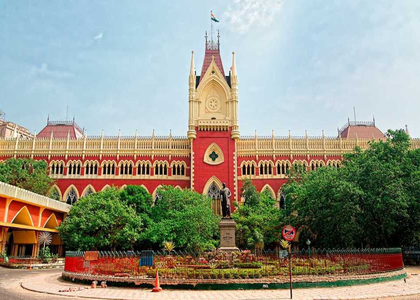
New Calcutta HC bench to hear plea on Dakshineswar Kali Temple's public or private status
Kolkata, Dec 10 A new division bench of the Calcutta High Court will now hear the case to determine whether the iconic Dakshineswar Kali Temple in the North 24 Parganas district of West Bengal, famous for its association with Shri Ramakrishna Paramahamsa, is a public or private property.
The new division bench of Justice Sabyasachi Bhattacharya and Justice Supratim Bhattacharya will hear the matter. Although the case regarding the ownership dispute of this iconic temple in West Bengal started long ago, there had been no hearing in the matter for the last couple of years.
Earlier in 2022, a case was filed in the form of a public interest litigation (PIL) on various allegations, including the process of election of the trustee board members of the iconic temple founded by the great Indian philanthropist, Rani Rashmoni.
But there was no hearing in the matter for a long time. On Wednesday, all the cases related to the temple were forwarded further to the new division bench of Justice Sabyasachi Bhattacharya and Justice Supratim Bhattacharya. The hearing of the main case will begin on December 17.
The Calcutta High Court had also directed that notices be sent to the Union and West Bengal governments on whether any central or state assistance had been provided to the temple trust or not.
In the main public interest litigation filed in the matter three years back, a section of the sevayats (priests) and disciples claimed that despite receiving financial assistance of Rs 130 crore from the state government and Rs 20 crore from the Union government over a period of time, the temple trustee board had not maintained proper accounts relating to this financial assistance received.
The petitioner also accused the temple authorities of gross irregularities in the allotment of places for shops and food stalls within the temple complex, as well as irregularities in the election of the members of the trustee board.
The petitioners also demanded a thorough probe into the matter, either by a central agency like the Enforcement Directorate (ED) or a judicial committee headed by any retired justice of any high court.
Disclaimer: This post has been auto-published from an agency feed without any modifications to the text and has not been reviewed by an editor
Open in app