
Op Devil Hunt failed to arrest escaped criminals, recover arms, raising poll concerns: Bangladesh media
By IANS | Updated: January 9, 2026 17:10 IST2026-01-09T17:07:31+5:302026-01-09T17:10:09+5:30



New Delhi, Jan 9 Operation 'Devil Hunt' in Bangladesh has become one of the most sweeping security crackdowns ...
Op Devil Hunt failed to arrest escaped criminals, recover arms, raising poll concerns: Bangladesh media
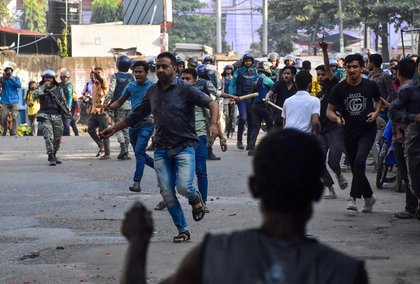
New Delhi, Jan 9 Operation 'Devil Hunt' in Bangladesh has become one of the most sweeping security crackdowns in recent years, with thousands arrested across Dhaka and other districts, yet failing to address the crux of rising violence before the February 12 election, according to reports.
While authorities claim the operation is vital to restoring law and order ahead of national elections, ordinary citizens and rights groups have voiced deep concerns about continued killings, unrecovered weapons, and escaped convicts still at large.
"Despite the launch of Operation Devil Hunt, continued killings and law enforcement's failure to arrest escaped criminals and recover looted weapons are raising serious concerns ahead of the national election," observed Bangladesh's 'The Daily Star' newspaper on Friday.
"Moreover, eight political killings have taken place since the declaration of the election schedule on December 11, including that of Inqilab Moncho spokesperson and July uprising frontliner Sharif Osman Bin Hadi," said the report.
After a break, the operation was relaunched soon after Hadi was shot on December 12 during an election campaign in Dhaka.
The second phase, beginning December 13, 2025, has continued into 2026 with intensified raids. The first phase began on February 8, 2025, under the interim government led by Chief Adviser Muhammad Yunus.
The exercise was aimed at curbing rising crime, recovering looted arms, and apprehending escaped convicts following the July-August 2024 student-led uprising that toppled the Sheikh Hasina-led Awami League regime.
Over 1,300 arrests were made in the first days alone, add Bangladesh media. Soon after the exercise was launched last year, reports claimed that among people arrested under the operation were mostly members of the Awami League and its associate organisations.
"Dhaka Metropolitan Police (DMP) arrested 98 people across the capital in the last 24 hours as part of 'Operation Devil Hunt Phase-2', targeting crime-prone areas under different police stations," reported the Daily Sun on January 3.
"Bangladesh Coast Guard arrested a man and recovered a firearm, hand bombs, and marijuana during an operation under Operation Devil Hunt Phase-2 in Bhola district," said the online portal of BSS news agency late last month.
Bhola district in the Barisal division of Bangladesh, about 117 km south of Dhaka, includes the largest island in the country with the same name.
Meanwhile, 'The Daily Star' claimed on Friday, quoting data from Police Headquarters, that over a thousand firearms looted during the July 2024 uprising, including 28 stolen from Narsingdi jail, are still unaccounted for.
Police figures also show 3,785 murder cases being filed across the country last year, including cases related to killings during the uprising.
"Furthermore, the whereabouts of around 710 inmates who escaped from various prisons during the uprising remain unknown," it added.
At least four murders have taken place in the capital, Dhaka, alone so far within the nine days this year.
Analysts in Bangladesh have warned that rising violence could suppress voter turnout, undermining democratic participation. Many also reportedly feel the operation is reactive rather than preventive, with killings continuing despite mass arrests.
Operation Devil Hunt reflects Bangladesh's struggle to balance security imperatives with citizen trust, while critics claim it is politically motivated.
While authorities highlight arrests and seizures, ordinary people remain haunted by unresolved violence, unrecovered arms, and political killings.
As elections approach, the operation's success will be judged not only by numbers but by whether it can restore genuine safety and confidence among the public.
Disclaimer: This post has been auto-published from an agency feed without any modifications to the text and has not been reviewed by an editor
Open in app