
Sharia over Azadi: Faridabad module used Al Qaeda banner as mask
By IANS | Updated: May 15, 2026 12:40 IST2026-05-15T12:36:57+5:302026-05-15T12:40:11+5:30



New Delhi, May 15 When the Faridabad module was busted initially, it was being linked to the Jaish-e-Mohammad ...
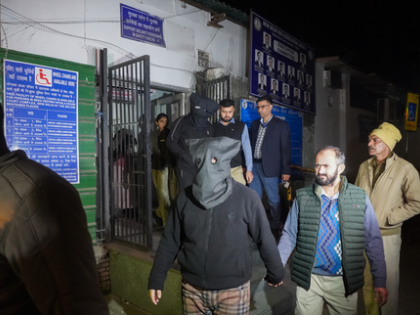
Sharia over Azadi: Faridabad module used Al Qaeda banner as mask
New Delhi, May 15 When the Faridabad module was busted initially, it was being linked to the Jaish-e-Mohammad (JeM). However the probe by the National Investigation Agency (NIA) found that the module operated under the banner of the Al-Qaeda affiliated Ansar Ghazwat-ul-Hind (AGuH), which is a lesser known terror outfit in India when compared to the JeM.
According to the NIA, the module led by Umar Un Nabi, a doctor by profession, had used the name of the Jaish briefly to attract the youth. This was because the name JeM resonates better with the youth when compared to the Al-Qaeda affiliated AGuH, the NIA probe learnt.
It appeared at first that the module operated independently. Although it largely did so, the ISI had initially managed to get some of its cronies in Jammu and Kashmir to guide the module.
What is interesting is that the module operated under the banner of the AGuH, which is a lesser known terror outfit in India when compared to the JeM.
The AGuH primarily operated in Jammu and Kashmir, but had not managed to make a massive impact. What is key here is that the AGuH is affiliated to the Al-Qaeda and not the Jaish-e-Mohammad or Lashkar-e-Tayiba.
This according to officials was a deliberate ploy to maintain plausible deniability. The Lashkar-e-Tayiba or Jaish-e-Mohammad connection immediately brings out the Pakistan link and the ISI wanted to avoid this.
The Al-Qaeda on the other hand is considered to be a global terror organisation and the Pakistan linkages are limited when compared to the other two terror groups, an official said.
Although the Faridabad module which executed the Delhi Red Fort blast appeared to be independent, in reality it was not. There were handlers on the payrolls of the ISI from Jammu and Kashmir who helped manage the modules.
Dr. Shaheen Shahid an important member of the module was in touch with Jammu and Kashmir-based Mufti Irfan Ahmad Wagay. Their interactions were key to the functioning of the module. Not only were the logistics arranged for, but the radicalisation drive which got members into the module was largely handled by the duo.
Another important aspect that the agencies learnt while investigation this module is that their intention was not to seek ‘Azadi’ or freedom for Jammu and Kashmir. This was a much more radicalised structure that felt that it would be better to seek Sharia law rather than Azadi.
The probe found that the ultimate goal was the implementation of Sharia law in Jammu and Kashmir. This according to the members of the module, would help in liberating the Union Territory.
Having the people live under the Sharia law would lead to an extremely radicalised society and hence the push for such a law was being made.
According to investigations, the aim was not to just focus on Jammu and Kashmir, blasts were being planned in Delhi and several other locations.
The long term plan was to create panic and fear and get the people to agitate against the Indian government.
An Intelligence Bureau official said that the findings indicate that the Faridabad module wanted to move away from the Azadi call. This meant that the battle in Kashmir cannot be political as there would be no traction going forward.
The shift that was being made was towards religious propaganda. They felt that this would gain more traction among the people when compared to making a political call for freedom.
The official explained that the module appeared to be acting more on the lines of the Al-Qaeda or Islamic State, which has primarily focussed on religion and the implementation of the Sharia law.
For the Islamic State this has worked well in many places and such a push has led to a wave of radicalisation across the world.
Umar Nabi was attempting something similar, officials said. In addition to attempting a series of bomb blasts, the Faridabad module also focussed heavily on messaging to lure the youth.
The messaging channels had been opened to push radical ideology so that the youth understand the importance of implementing the Sharia law, an official also said.
Disclaimer: This post has been auto-published from an agency feed without any modifications to the text and has not been reviewed by an editor
Open in app