
Weird, without any precedent: Syed Qasim Rasool Ilyas on SC's rejection of bail to son Umar Khalid
By IANS | Updated: January 7, 2026 16:10 IST2026-01-07T16:08:40+5:302026-01-07T16:10:17+5:30


Delhi, Jan 7 Expressing his disappointment over the Supreme Court order rejecting bail to his son and student ...
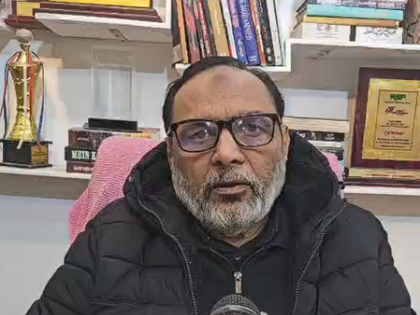
Weird, without any precedent: Syed Qasim Rasool Ilyas on SC's rejection of bail to son Umar Khalid
Delhi, Jan 7 Expressing his disappointment over the Supreme Court order rejecting bail to his son and student activist Umar Khalid in the 2020 Delhi riots case, Syed Qasim Rasool Ilyas said, "For the first time in the history of criminal justice system, the Apex Court made a distinction between the accused and categorised them into two different groups, despite all of them being booked in the same case."
Ilyas, who made these remarks while speaking to IANS, also questioned the "rationale" behind segregating the seven accused of the Delhi 2020 riots into two categories for granting bail, despite the Delhi Police not making any "differentiation" in its case.
"Umar Khalid and Sharjeel Imam were dubbed as ideological architects, while others were described as followers. However, such a claim is not mentioned in the police chargesheet," he pointed out.
Notably, the Supreme Court on Monday denied bail to Umar Khalid and Sharjeel Imam in the 2020 North-East Delhi riots case, while granting conditional bail to five others - Gulfisha Fatima, Meeran Haider, Shifa-ur-Rehman, Mohammad Salim Khan, and Shadab Ahmad.
The Apex Court, while rejecting bail to Umar and Sharjeel, said that they stood on "a higher footing in the hierarchy of participation" in the larger conspiracy.
Ilyas defended his son, Umar Khalid, incarcerated for about five years over the alleged role in the 2020 Delhi riots, claiming that there is no evidence against him, as he was neither in the capital when the riots broke out, nor did he make any incendiary comments that could have stirred up communal unrest.
"Umar protested against the Citizenship Amendment Bill and the National Register of Citizens (NRC), and therefore the question one must ask is whether he does not have the right to raise dissent in a democracy," he added.
On the provocative slogans raised against Prime Minister Narendra Modi and Union Home Minister Amit Shah in Jawaharlal Nehru University (JNU) campus on the same day when Umar and Sharjeel's bail pleas were dismissed, he said that the students were raising their voice over the denial of bail to the duo.
"According to my knowledge, the protest was done on the denial of their bail. They were outraged and chanted slogans," he said, while taking objection to a "recent trend" of booking slogan-shouters for expressing dissent.
Disclaimer: This post has been auto-published from an agency feed without any modifications to the text and has not been reviewed by an editor
Open in app