
Shah’s Strategy Floors Mamata!
By Vijay Darda | Updated: May 11, 2026 06:55 IST2026-05-11T06:55:12+5:302026-05-11T06:55:33+5:30



Amit Shah has once again proven himself to be India’s modern-day Chanakya
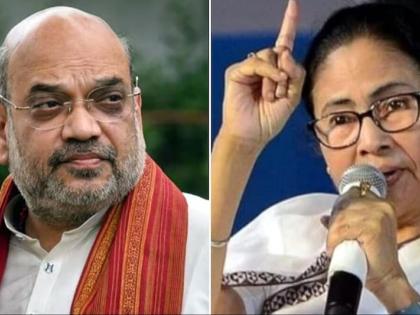
Shah’s Strategy Floors Mamata!
Narendra Modi and Amit Shah are an exceptional pair. They always have a new goal and remain wholly dedicated to achieving it.
Over the past three to four months, every non-BJP leader I met maintained that defeating ‘Didi’, that is Mamata Banerjee, would be extremely difficult. They argued that she had mastered every political tactic, from persuasion and inducement to intimidation and strategy. Bengal’s pulse, they said, was firmly under her control. Even some BJP leaders quietly admitted that Didi might well emerge victorious. Yet, my own assessment was different. I believed it would not be easy for Mamata to break through Amit Shah’s intricate political strategy. Maharashtra chief minister Devendra Fadnavis, after returning from a roadshow in West Bengal, had also remarked, “Don’t be surprised if the BJP wins more than 200 seats!”
I remained in constant touch with my acquaintances in Kolkata and across West Bengal. They all echoed one sentiment: If the muscle power and intimidation of the Trinamool Congress could be curbed, nothing could stop the BJP from coming to power. Eventually, that is exactly what happened. Amit Shah tightened the reins so effectively that the Trinamool strongmen barely dared to step out of their dens. Nearly 2,50,000 personnel from the central security forces were deployed across the state to ensure that no voter was prevented from casting a ballot anywhere. This time, the Election Commission also deputed fearless officers from across the country as election observers. You must have seen the video of Uttar Pradesh DIG Ajay Pal Sharma, who was sent to West Bengal as election observer, sternly warning residents in the locality of a candidate named Jahangir that any further reports of voter intimidation would invite severe consequences. Jahangir was allegedly linked to threats against voters, warning them that supporting the BJP would have deadly repercussions. In the Falta Assembly constituency, Jahangir wielded enormous influence and was considered very close to Mamata Banerjee’s nephew Abhishek Banerjee. But Ajay Pal Sharma is an officer whose very name strikes fear into criminals; he is widely known as the encounter specialist.
While the Election Commission remained vigilant about ensuring fear-free elections, Amit Shah infused BJP workers with such courage and confidence that they stood ready to confront intimidation head-on. Shah spent a full 15 days in West Bengal, staying overnight in different zones and holding meetings late into the night, often past midnight. His objective was crystal clear: Every BJP vote must be cast by 11 am on the polling day. The removal of nearly 91 lakh allegedly illegal names from the electoral rolls during the SIR had already weakened Mamata significantly. Shah’s meticulous strategy ultimately brought her campaign to its knees. Mamata is undoubtedly a fighter, but this time, she encountered an adversary even more formidable than herself.
Despite his packed schedule, Amit Shah participated in more than 50 rallies and roadshows. Some of his declarations struck a deep chord with the people. He warned that hooligans should remain indoors or they would be dealt with sternly. He also thundered that another Babri Masjid would never be allowed to come up on Bengal’s soil. Shah further declared that once the BJP formed the government, land for fencing along the India-Bangladesh border would be provided within 45 days. The Mamata government, he alleged, had long withheld land for the border fencing project. Because of the porous border, Bangladeshi infiltrators were reportedly entering West Bengal, and allegations persisted that, with the help of the state machinery, many were being transformed into Indian citizens in return for electoral support to the Trinamool Congress.
Meanwhile, Amit Shah orchestrated Prime Minister Narendra Modi’s campaign appearances with remarkable precision, ensuring that voters across every major region had the opportunity to hear him. The Prime Minister addressed rallies and conducted roadshows at 24 locations spanning 19 districts, covering more than 250 constituencies. After the election results, Narendra Modi stated unequivocally that Amit Shah was the true architect of this victory. Back in 2014, Amit Shah had vowed to uproot Mamata Banerjee’s government from West Bengal. It may have taken 12 years, but he ultimately fulfilled that resolve. In the 2016 Assembly elections, the BJP had won merely three seats. In 2021, that number rose dramatically to 77. And in 2026, it went up to 207. In many ways, Amit Shah has fulfilled Shyama Prasad Mukherjee’s dream.
Following the defeat, Mamata Banerjee alleged that the BJP had ‘looted 100 seats’, while Rahul Gandhi described the outcome as vote theft. Having closely observed politics for at least five decades, I can say that defeated leaders searched for excuses to preserve their dignity in the past too, but they simultaneously analysed the reasons for their loss. Today, however, introspection has disappeared, only allegations remain. Few are willing to understand that merely hurling accusations does not weaken a wrestler. If one wishes to defeat the wrestler, one must strengthen oneself and master the necessary techniques and strategies. At the same time, there must never be a compromise on national interest. Otherwise, the result will be exactly what unfolded in West Bengal. I have heard many people say that Amit Shah has, in fact, saved West Bengal.
The Narendra Modi-Amit Shah partnership is truly extraordinary. After every victory, they do not pause; instead, they immediately move towards the next objective. And if they face defeat somewhere, they begin preparing for the next battle with renewed determination. This duo works relentlessly, 24 hours a day, seven days a week. Does the Opposition have such a pair? Someone must explain to them that elections are not won through empty rhetoric and endless accusations. Victory demands sleepless nights and relentless hard work. Only then does dawn break. Why did Vijay’s triumph in Tamil Nadu create such a wave of optimism? Because, distancing himself from conventional Dravidian politics, Vijay presented a new model of secular politics and pledged to fulfil people’s aspirations. Why did the BJP win Assam for the third consecutive time? That is because it delivered on its promises. And why did the last bastion of the Left in Kerala crumble? Because Indian communists have long carried the tendency that if it rains in Beijing or Moscow, they instinctively open umbrellas in India!
The essence of it all is simple: If you wish to earn a place in people’s hearts, you must first understand their pulse. Modi and Shah understand that pulse and they understand the heartbeat of the nation as well.
The author is the chairman, Editorial Board of Lokmat Media and former member of Rajya Sabha.
