
Attainment of criticality at Prototype Fast Breeder Reactor reflects India’s indigenous strength
By IANS | Updated: April 7, 2026 18:15 IST2026-04-07T18:13:42+5:302026-04-07T18:15:34+5:30



New Delhi, April 7 The attainment of criticality at the Prototype Fast Breeder Reactor (PFBR) marks more than ...
Attainment of criticality at Prototype Fast Breeder Reactor reflects India’s indigenous strength
New Delhi, April 7 The attainment of criticality at the Prototype Fast Breeder Reactor (PFBR) marks more than a technological milestone; it reflects the maturity of India’s long standing nuclear vision and the strength of its indigenous capabilities, an official statement said on Tuesday.
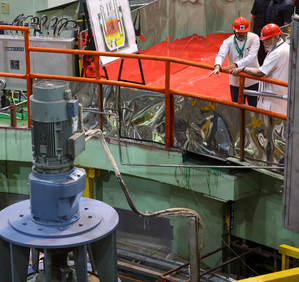
The indigenously designed and built Prototype Fast Breeder Reactor (PFBR) at Kalpakkam in Tamil Nadu successfully attained its first criticality on April 6, marking the initiation of a sustained nuclear chain reaction.
This PFBR is a 500 MWe (Megawatt electrical) reactor built by Bharatiya Nabhikiya Vidyut Nigam Limited (BHAVINI) at the Kalpakkam Nuclear Complex.
“The progress at Kalpakkam Nuclear Complex signals confidence in advanced reactor technologies and reinforces the role of institutions such as Department of Atomic Energy in driving this transformation. As capacity expands and new technologies take shape, nuclear energy is set to play a far more central role in India’s energy mix,” said the official fact-sheet.
India holds limited uranium reserves but one of the largest thorium reserves in the world. To make the most of these resources, the Department of Atomic Energy designed a three-stage nuclear power programme built on a closed nuclear fuel cycle. The goal is to progressively multiply domestic fissile resources and secure long-term energy independence.
India's current nuclear capacity is 8.78 Gigawatt (GW). In 2024–25, nuclear power plants generated 56,681 million units of electricity across the country.
Nuclear power has consistently accounted for around 3 per cent of India's total electricity generation. In 2024–25, its share stood at 3.1 per cent.
“India's nuclear capacity is set to grow nearly 3x in the coming years. With indigenous 700 Megawatt (MW) reactors and 1,000 MW reactors being developed through international cooperation, the installed capacity is projected to reach 22.38 GW by 2031–32,” said the statement.
India has signed Inter-Governmental Agreements (IGAs) on Civil Nuclear Cooperation for peaceful purposes with 18 countries, reflecting the growing global confidence in India's nuclear programme.
The Nuclear Energy Mission allocates Rs 20,000 crore towards the design, development, and deployment of Small Modular Reactors (SMRs), signalling a serious long-term investment in indigenous nuclear technology. At least five indigenously designed SMRs are to be operational by 2033, strengthening India's clean and reliable energy roadmap.
The Bhabha Atomic Research Centre (BARC) is leading the development of next-generation reactor designs, including the 200 MWe Bharat Small Modular Reactor (BSMR-200), the 55 MWe SMR-55, and a High-Temperature Gas-Cooled Reactor of up to 5 MWth (Megawatt thermal) designed for hydrogen generation.
Moreover, to support the mission, the government has enacted the 'Sustainable Harnessing and Advancement of Nuclear Energy for Transforming India (SHANTI) Act, 2025.’
The Act consolidates and modernises India's nuclear legal framework. It enables limited private participation in the nuclear sector under regulatory oversight, opening new avenues for collaboration and investment.
Disclaimer: This post has been auto-published from an agency feed without any modifications to the text and has not been reviewed by an editor
Open in app