
India has potential to unlock Rs 78,500 crore value from textile waste: Report
By IANS | Updated: April 21, 2026 15:40 IST2026-04-21T15:35:41+5:302026-04-21T15:40:18+5:30



New Delhi, April 21 India has the potential to unlock about $9.4 billion (nearly Rs 78,500 crore) in ...
India has potential to unlock Rs 78,500 crore value from textile waste: Report
New Delhi, April 21 India has the potential to unlock about $9.4 billion (nearly Rs 78,500 crore) in value from its textile waste annually by strengthening collection, sorting and recycling systems, a new report showed on Tuesday.
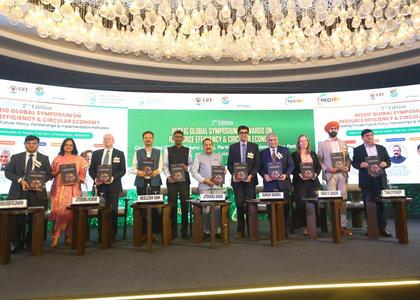
The joint report by FICCI and the Resource Efficiency and Circular Economy Industry Coalition (RECEIC) said India generates around 7.25 million tonnes of textile waste annually, but a significant share remains underutilised due to fragmented collection systems, lack of standardised sorting and limited recycling capacity.
Nearly $9.4 billion of value is currently unrealised, largely due to inefficiencies across collection, sorting and recycling.
Importantly, about 85 per cent of this value lies in reuse pathways, which remain underdeveloped, said the report.
To unlock the opportunity, the FICCI–RECEIC report recommends a national Extended Producer Responsibility (EPR) framework for textiles, investment in collection and sorting infrastructure, standardised grading and traceability systems, integration of informal sector workers and expansion of recycling capacity.
Post-consumer textile waste systems are highly fragmented, with nearly 45 per cent of waste not entering recovery pathways and instead being diverted to landfill or incineration.
“A key bottleneck identified is sorting, described as the ‘value gate’ of the textile waste ecosystem. However, over 95 per cent of sorting in India is manual, with limited technology adoption and absence of a standardised grading framework,” said the report.
The report also noted policy and infrastructure gaps, including the absence of a dedicated Extended Producer Responsibility (EPR) framework for textiles, weak source segregation and inadequate traceability mechanisms.
On recycling, India’s ecosystem is dominated by mechanical processes, with limited chemical recycling capacity, constraining the ability to handle blended fabrics and scale circularity, it added.
“While circular materials can significantly enhance supply chain resilience and reduce dependence on virgin resources, achieving this will require coordinated action across policy, industry, and infrastructure,” said the report.
Disclaimer: This post has been auto-published from an agency feed without any modifications to the text and has not been reviewed by an editor
Open in app