
India-New Zealand FTA puts people first, powering farmers, innovators and youth onto global stage: Piyush Goyal
By ANI | Updated: December 22, 2025 11:45 IST2025-12-22T11:42:21+5:302025-12-22T11:45:18+5:30


New Delhi [India], December 22 : India and New Zealand have concluded a comprehensive and forward-looking Free Trade Agreement ...
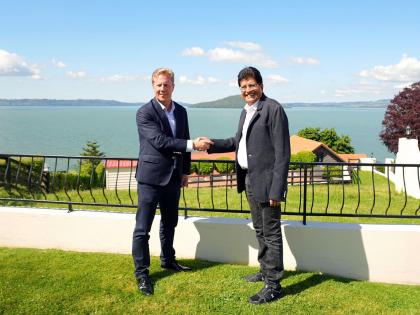
India-New Zealand FTA puts people first, powering farmers, innovators and youth onto global stage: Piyush Goyal
New Delhi [India], December 22 : India and New Zealand have concluded a comprehensive and forward-looking Free Trade Agreement (FTA), marking a major economic and strategic milestone in India's engagement with the Indo-Pacific region.
The agreement, aligned with the national vision of Viksit Bharat 2047, is among India's fastest-concluded FTAs with a developed country.
The negotiations were formally launched on March 16, 2025, during a meeting between Union Minister of Commerce and Industry Piyush Goyal and New Zealand's Minister for Trade and Investment Todd McClay.
The agreement was finalised after five formal rounds of negotiations and multiple in-person and virtual meetings.
Speaking on the conclusion of the agreement, Commerce and Industry Minister Piyush Goyal said, "Today this Free Trade Agreement is about building trade around people and launching opportunities, for our farmers, for our entrepreneurs, for our students, for our Women and for our innovators. Boosting yields and farmer incomes, the agreement drives modern agricultural productivity. It opens doors for Indian businesses in the region through well-integrated directional exports and gives our youth choices to learn, work and grow on a global stage."
Under the FTA, New Zealand will eliminate tariffs on 100 per cent of its tariff lines, providing duty-free market access for all Indian exports.
This is expected to significantly enhance the competitiveness of labour-intensive sectors such as textiles, apparel, leather, footwear, marine products, gems and jewellery, handicrafts, engineering goods and automobiles, directly benefiting workers, artisans, women, youth and MSMEs.
India, on its part, has offered tariff liberalisation in 70 per cent of lines, covering 95 per cent of bilateral trade, while ensuring protection for sensitive sectors. Market access has been excluded for key agricultural products such as dairy, coffee, milk, cheese, onions, sugar, spices, edible oils and rubber to safeguard domestic farmers and industry.
The agreement also delivers New Zealand's most ambitious services offer to India, covering 118 services sectors, including IT and IT-enabled services, professional services, education, telecommunications, construction, tourism and financial services. Commitments under Most-Favoured Nation treatment extend to about 139 sub-sectors.
Commerce Secretary Rajesh Agrawal described the pact as "A new generation trade agreement built on tariffs, agricultural productivity, Investment and Talent with complementarity at the core. India's strengths expand exports, support labour-intensive growth and power services. New Zealand gains deeper, more predictable access to India's large and growing economy. The movement of people-students, professionals, and skilled workers converges these strengths."
A key highlight of the FTA is enhanced mobility for Indian students and professionals. It provides post-study work visas of up to three years for STEM graduates and up to four years for doctoral scholars, with no numerical caps. A new Temporary Employment Entry Visa pathway with a quota of 5,000 professionals and 1,000 Work and Holiday Visas has also been created.
The agreement further commits New Zealand to facilitate investments worth USD 20 billion into India over the next 15 years, supporting manufacturing, infrastructure, services and innovation under the Make in India initiative.
With bilateral trade in goods and services at approximately USD 2.4 billion in 2024, merchandise trade of USD 1.3 billion and services at USD 2.4 billion, led by travel, IT and business services. The FTA is expected to provide a stable and predictable framework to unlock the full potential of the India-New Zealand economic partnership.
Disclaimer: This post has been auto-published from an agency feed without any modifications to the text and has not been reviewed by an editor
Open in app