
India's cotton import duty hurting textile competitiveness, warns new Study
By ANI | Updated: May 7, 2026 16:35 IST2026-05-07T22:00:36+5:302026-05-07T16:35:08+5:30



New Delhi [India], May 7 : A landmark study released by the Confederation of Indian Textile Industry (CITI) on ...
India's cotton import duty hurting textile competitiveness, warns new Study
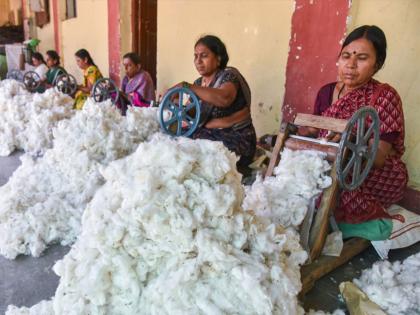
New Delhi [India], May 7 : A landmark study released by the Confederation of Indian Textile Industry (CITI) on Thursday has sounded the alarm over India's 11 per cent import duty on cotton, warning that it is eroding the competitiveness of the country's textile and apparel sector at a time when the industry is chasing an ambitious USD 350 billion target by 2030.
The report, jointly prepared by global textile consultancy Gherzi and the International Cotton Advisory Committee (ICAC), examines cotton production, pricing, and trade policy across India's textile value chain and its findings make for uncomfortable reading for policymakers.
The study noted that ad-hoc waivers have done little to solve the problem. The import duty was temporarily lifted between August and December 2025, only to be reinstated on January 1, 2026. Industry experts say this stop-start approach has left mills unable to plan ahead.
"A stable and predictable policy is imperative to allow the mills to sustain their operations," the report stated, pointing out that competing Asian nations enjoy duty-free access to international cotton a gap that places Indian manufacturers at a serious disadvantage.
The report puts a concrete number on the solution. It recommends empowering the Cotton Corporation of India (CCI) to supply cotton to mills at internationally competitive prices, estimating this would require a government buffer of approximately Rs 1,500 crore annually to cover about 100 lakh bales roughly one third of the annual crop.
The study also recommends that the CCI maintain a strategic reserve equivalent to three months of consumption to cushion against price volatility, drawing a parallel with China's cotton reserve policy. A Cotton Price Stabilization Fund with a 5 per cent interest subvention is also proposed to ease working capital pressures during the peak procurement season from November to March.
Beyond trade policy, the report flags stagnant farm yields as a structural drag on the sector. Rising per-unit production costs, are limiting farmers ability to benefit from market opportunities even when prices are favorable.
CITI Chairman Ashwin Chandran framed the issue as one of mutual interest between farmers and industry. "A thriving textile and apparel industry can be the farmer's strongest customer," he said, invoking the government's 5F vision, Farm to Fibre to Factory to Fashion to Foreign.
The stakes are high. Textiles and apparel are India's second-largest employers and a significant contributor to GDP and export earnings. Yet the sector is already showing strain, as exports fell 2.2 per cent in dollar terms year-on-year in FY26, settling at USD 35.79 billion, making the road to USD 100 billion in exports by 2030 a steep climb.
Disclaimer: This post has been auto-published from an agency feed without any modifications to the text and has not been reviewed by an editor
Open in app