
India's critical minerals mission directionally right but moving slower than expected: Novasensa
By ANI | Updated: December 24, 2025 13:30 IST2025-12-24T13:28:52+5:302025-12-24T13:30:04+5:30


By Kaushal Verma New Delhi [India], December 24 : India's National Critical Minerals Mission is directionally very strong but ...
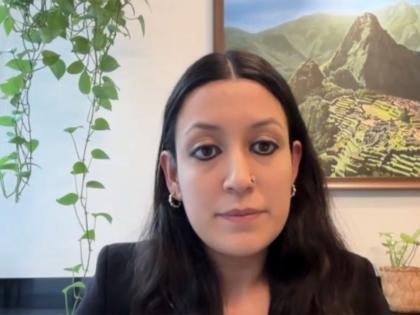
India's critical minerals mission directionally right but moving slower than expected: Novasensa
By Kaushal Verma
New Delhi [India], December 24 : India's National Critical Minerals Mission is directionally very strong but currently moving slower than anticipated, and there is a need for clearer execution frameworks and faster reviews, Vanessa Lacayo, co-founder and chief operating officer, Novasensa, toldin an interview.
"The National Critical Minerals Mission is directionally very strong, but in execution it is currently moving slower than many in the industry had anticipated. The mission was launched in August, and project proposals are expected to be reviewed by the Ministry of Mines in January," she said during an online exclusive interview with ANI.
Novasensa is a company that recovers rare earth and critical minerals from e-waste through a sustainable process called hydrometallurgy, giving them a second life and minimizing environmental impact.
Talking on NCCM, she said that the mission is a central pillar of India's strategy to secure access to rare earth minerals essential for electronics and advanced manufacturing. However, Lacayo said execution timelines and clarity around engagement with industry remain key concerns.
Her comments come at a time when the Union Cabinet has approved a Rs7,280 crore ($875 million) incentive package, last month, to boost domestic production of Rare Earth Permanent Magnets, a move welcomed by industry.
"I think this is a very important initiative and it signals that the government is moving in the right direction," Lacayo said, adding that the decision reflects a more targeted approach within the broader critical minerals framework.
"This decision shows that the government is thinking beyond the broader critical minerals framework and is now getting specific about magnets and downstream manufacturing," she said.
However, she cautioned that the success of the scheme will depend heavily on implementation. "Producing magnets is not only about availability of material," Lacayo said. "One of the most complex aspects is the separation of individual rare earth elements."
Rare earths are often extracted together, but separating them into individual, high-purity elements is technically challenging, she said, adding that downstream capabilities are equally critical. "Building the downstream capabilities to convert those materials into magnet-grade alloys and finished magnets is equally important."
Novasensa is engaged with IIT ISM Dhanbad as an industry partner under the Centre of Excellence framework, focusing on extracting critical minerals from secondary sources. Lacayo said that while avoiding duplication across projects is sensible, overly narrow execution pathways can raise risks.
"When execution pathways become too narrow, it can concentrate risk," she said, arguing that parallel efforts across multiple institutions can help de-risk outcomes. "Greater collaboration between Centres of Excellence, where different teams work on complementary parts of the same problem, would strengthen delivery."
She said faster reviews and clearer frameworks would help. "Oversight is important, but review processes should not become bottlenecks," Lacayo said. "This is a space where speed matters because we are competing globally across mining, extraction, and midstream capabilities."
Startups face particular challenges under the current system, she said, citing uncertainty around funding. "There are multiple schemes being announced, but for startups it can be difficult to understand which scheme applies, how to access it, and how long it will take for funds to actually reach the ground," she said.
She pointed to initiatives such as the Research Development and Innovation Fund, noting that while they are expected to address mid-technology readiness gaps, timelines remain unclear. "Startups operate with limited runway, so uncertainty around funding timelines becomes a significant constraint," she said.
Lacayo, who is also part of the Confederation of Indian Industry's mining committee, said mining and exploration face long-standing hurdles. "There are still bottlenecks around land access, auction design, exploration scope, and clearances," she said, noting that exploration takes time to translate into production.
As a result, India must build midstream capabilities in parallel. "Once mines become operational, we need to be ready to process the ores domestically," she said.
Disclaimer: This post has been auto-published from an agency feed without any modifications to the text and has not been reviewed by an editor
Open in app