
Nearly 40 pc govt organisations will likely establish TrustOps by 2028 to counter deepfake
By IANS | Updated: May 18, 2026 18:25 IST2026-05-18T18:20:37+5:302026-05-18T18:25:16+5:30



New Delhi, May 18 Nearly forty percent of government organisations across the globe will establish dedicated TrustOps functions ...
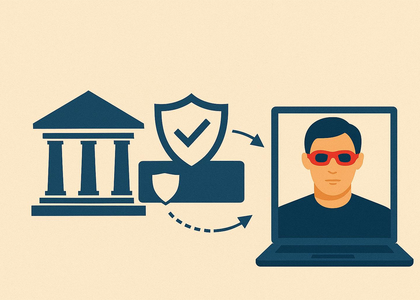
Nearly 40 pc govt organisations will likely establish TrustOps by 2028 to counter deepfake
New Delhi, May 18 Nearly forty percent of government organisations across the globe will establish dedicated TrustOps functions by 2028 to combat deep fake identity impersonation and disinformation-as-a-service (DaaS), a report said on Monday.
The report from a business and technology insights company Gartner, Inc. urged government organisations to urgently establish trust capabilities, such as transitioning from reactive fact-checking to a proactive trust architecture, to defend against deepfakes.
"These threats manifest as public-facing disinformation campaigns, such as impersonating leaders to issue misleading public statements, and in attacks on internal systems," the report said.
Deepfakes aims to compromise automated biometric authentication (voice or face) or use social engineering to manipulate employees into harmful actions, typically by rapidly establishing authority and urgency.
“Deepfakes can undermine or even weaponize notions of digital identity, attacking the credibility of the State itself,” said Daniel Nieto, Sr. Director Analyst at Gartner.
Government organisations can consider implementing solutions such as the Coalition for Content Provenance and Authenticity (C2PA) protocol in the long term, he said.
“They should mandate outbound content grounding by adopting the C2PA protocol, embedding tamper-proof cryptographic metadata into all official digital media,” Nieto added.
The report called on organisations to orchestrate an oversight role in consultation with primary stakeholders
Another recommendation is to identify and audit high-risk administrative workflows, such as financial disbursements.
Implement security measures that require multiple approvers and application-level authentication to eliminate single-point-of-failure vulnerabilities exploitable by voice-cloned executives, the firm said.
To mitigate the existential risk of institutional irrelevance, CIOs must shift from reactive fact-checking to proactive trust architecture, the report said.
The implications of deepfakes at scale, resulting from the marriage of social media and synthetic content demand an orchestrated, rapid, enterprise wide defence.
Government organisations should avoid relying on reactive takedowns as they cannot outrun a deepfake once it is viral, the report said, adding that organisations must saturate the information space with the truth first.
Disclaimer: This post has been auto-published from an agency feed without any modifications to the text and has not been reviewed by an editor
Open in app