
Powering India’s Solar Future: In Conversation with Pawan Garg, Founder & JMD, Fujiyama Power Systems Limited
By Impact Desk | Updated: February 24, 2026 11:37 IST2026-02-24T11:36:55+5:302026-02-24T11:37:08+5:30



India’s rooftop solar sector has transformed dramatically over the past decade, evolving from a niche alternative energy solution into ...
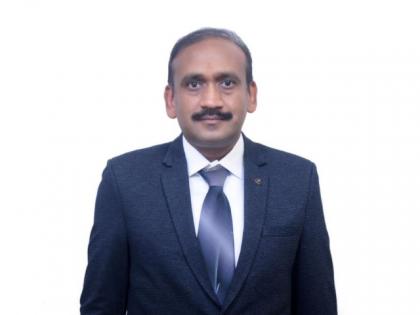
Powering India’s Solar Future: In Conversation with Pawan Garg, Founder & JMD, Fujiyama Power Systems Limited
India’s rooftop solar sector has transformed dramatically over the past decade, evolving from a niche alternative energy solution into a mainstream power source driven by policy support, cost reductions, and rising consumer awareness. At the forefront of this transformation is Fujiyama Power Systems Limited. In this exclusive interaction, Pawan Garg, Founder & Joint Managing Director,Fujiyama Power Systems Limited shares insights into the company’s journey, strategic growth drivers, technological innovations, and long-term vision for India’s renewable future.
From College Startup to Solar Powerhouse
Mr. Pawan Garg recalls that the company was founded soon after college with his partner Yogesh Dua, starting operations from a single room. Initially focused on inverters, they identified a key consumer pain point—limited battery backup during power cuts. Their early innovation was integrating solar panels and charge controllers into inverter systems, allowing customers to achieve longer backup while reducing electricity bills.
This hybrid approach proved ahead of its time. As solar panel prices declined and awareness increased, the company was already positioned to scale, having built strong technical expertise and customer trust from its inverter business.
Evolution of India’s Rooftop Solar Industry
According to Mr. Garg, when the company entered solar around 2008, awareness was minimal and costs were high. Over time, falling panel prices, improved financing access, and government initiatives significantly accelerated adoption.
Recent schemes such as rooftop subsidy programs and regulatory frameworks encouraging domestic manufacturing have further strengthened the ecosystem. Earlier barriers—such as affordability, lack of awareness, and limited subsidy access—are gradually disappearing, making residential solar more accessible to households across income segments.
Drivers Behind Rapid Residential Solar Growth
Several factors are fueling demand today:
Declining component costs
Government subsidy schemes
Improved product reliability
Rising electricity tariffs
Increasing power outages in certain regions
Mr. Garg emphasizes that affordability combined with awareness has created a tipping point. Customers now view rooftop solar not just as a backup solution, but as a long-term financial investment.
Financial Growth Backed by Structural Strength
The company’s recent financial performance reflects strong operational execution. Key growth drivers include:
Expansion of dealer and distributor networks
Manufacturing scale-up
Backward integration across production
Supply chain optimization
By producing more components in-house, the company has reduced costs while improving quality control. This structural efficiency allows it to deliver better pricing to customers while maintaining healthy margins.
Differentiation in a Competitive Market
In a crowded solar marketplace, the company focuses on three pillars: technology, quality, and service.
One of its strongest differentiators is its direct service model. Instead of relying solely on third-party service providers, the company employs its own service engineers. This ensures faster response times, better accountability, and consistent customer experience.
Mr. Garg shares that their philosophy stems from early entrepreneurial days when the founders personally serviced customer batteries every Sunday. That experience shaped their belief that service is not a cost center but a growth engine—driving referrals, loyalty, and product improvement insights.
Policy Support and Domestic Manufacturing Push
Government initiatives promoting domestic production have played a major role in shaping investment decisions. Policies encouraging local manufacturing and approved component lists have motivated the company to invest in its own production facilities, including a solar cell plant and future expansion projects.
These policies serve dual purposes:
1. Enabling customers to access affordable systems
2. Strengthening India’s self-reliance in solar manufacturing
Mr. Garg notes that without such policy incentives, large-scale manufacturing expansion would have been far more challenging.
Importance of Tier-2 and Tier-3 Markets
Unlike many competitors who focused first on metros, the company began its journey in smaller cities and towns. These regions remain central to its strategy for several reasons:
Higher power outage frequency
Greater availability of rooftop space
Stronger motivation to save on electricity bills
Faster adoption once benefits are explained
In contrast, metro cities often have apartment complexes where individual rooftop installations are difficult. As a result, Tier-2 and Tier-3 markets continue to drive significant growth.
Technology Shaping the Future of Rooftop Solar
Mr. Garg believes the next wave of innovation will come from integrated energy systems combining:
Battery storage
Hybrid solar systems
Smart inverters
Mobile-based monitoring and control
The company’s proprietary rapid Maximum Power Point Tracking (rMPPT) technology enables inverters to extract maximum energy even under low-light or fluctuating weather conditions, improving performance during early mornings, evenings, and cloudy days.
Globally, regions with high solar penetration are already experiencing daytime power surpluses and evening shortages. Future systems will therefore allow users to store daytime energy and use it during peak demand hours, reducing grid dependence.
Vision for 2030
Looking ahead, Mr. Garg sees massive growth potential in residential rooftop solar as renewable energy adoption accelerates worldwide. India’s push toward clean power and decentralized generation aligns closely with the company’s roadmap.
Having already served over one million households, the long-term goal is to expand that number significantly by 2030 through:
Expanded manufacturing capacity
Integrated solar-plus-storage solutions
Wider distribution reach
Continued R&D investment
He emphasizes that the mission is not just selling products but delivering complete energy ecosystems—from design to installation to long-term service.
From humble beginnings selling a handful of inverters to becoming a vertically integrated clean energy manufacturer, the company’s journey mirrors the transformation of India’s renewable sector. With a strong foundation in innovation, manufacturing, and customer-centric service, it is well positioned to play a defining role in India’s transition toward a sustainable energy future.
Open in app
