
“I Used to Work in 50-Degree Heat in the Middle East”: Harman Singha on His Journey from Merchant Navy to Movies
By Lokmat Times Desk | Updated: December 9, 2025 18:02 IST2025-12-09T18:01:46+5:302025-12-09T18:02:56+5:30



Harman Singha is an actor, writer, and host who has steadily built a diverse body of work across digital ...
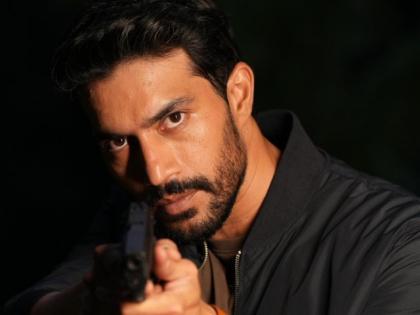
“I Used to Work in 50-Degree Heat in the Middle East”: Harman Singha on His Journey from Merchant Navy to Movies
Harman Singha is an actor, writer, and host who has steadily built a diverse body of work across digital platforms, OTT shows, and mainstream films. Growing up between Delhi, Rajasthan, Jammu & Kashmir, Madhya Pradesh, and Pune, he reflects on how moving around shaped his worldview. In an exclusive interview with Lokmat Times Harman opened up on his journey and his future plans...
You grew up in multiple places and come from an army family. Later, you also worked in the Merchant Navy. How have these experiences shaped your worldview and the stories you like to tell?
"I've grown up in a lot of places — Delhi, Rajasthan, Jammu & Kashmir, Madhya Pradesh, Maharashtra, Pune, where I did my high school. I think it shapes your worldview in a fun manner, giving you a wider range of stories, especially characters. You're not limiting yourself to just one place that you've grown up in. I've always wanted to tell more stories that feature people from the services. I wrote the show Avrodh for Sony Liv as the head writer. A lot of it was because I've seen from afar, because my father was in the army, how army men operate. And there is a soul and a human being under the uniform. It's not just, you know, yes sir, no sir — it's not so staccato.
The Merchant Navy also helped me massively. Those were some of the toughest years of my life. I used to work in 50-degree heat in the Middle East and then travel all over the world. It gave me a lot of exposure but also taught me that beyond exhaustion, I have the ability to work — which I still use on set, even as an AD, producer, writer, doing all the odd jobs. You need to have stamina. You need that sense of, okay, we will not leave till the job is done. Merchant Navy and that exposure really helped me have strong stamina on set. I can work for 40 hours, 80 hours, it doesn’t matter, till the job is not done. I like to believe that I’ll have the energy to give one more take, shoot one more scene, stay on set a little longer. That’s why you’ll never find me complaining once I’ve reached the set."
Before stepping in front of the camera, you worked as an assistant director and writer. How did that foundation influence your approach to acting today?
"It's everything — everything that I’ve learnt on the job. I always tell people that my film school is a mix of three years of non-fiction television, where I did shows like MasterChef, a Doordarshan show called Veel Smart Shrimati, was an assistant director on Roadies Season 8, and did Players for Channel V. Then I finally started doing fiction as Chief AD with Nagesh Kukunur before making my own content. That is everything for me. My film school is a mix of learning on the job.
I also interned as a writer with Abbas Tyrewala. In the day, I went to Nagesh Kukunur’s office, and in the evening to Abbas’s house. For two years, I just learnt how to write, appreciate films, understand what kind of films I like, how to write, how to get a project together, and how to break down a script.
Till today, if you ask my closest friends or producers, I like to believe that as an actor, you’ve got to behave, especially behave. Behave and work like a technician on set, not like some special person kept in a vanity van. The only reason actors are kept in vanity vans or AC rooms is so they look fresh on camera because they’re a cosmetic part of the whole thing. My training behind the camera taught me how to be a more complete actor. It taught me technically how to hit my mark, understand lensing, understand lighting, take care of costume, maintain continuity. I’ve done all those jobs, and I apply everything when it comes to acting."
Arranged Couple with Girliyapa became a turning point for you online. What do you think resonated so strongly with audiences about that series and your character?
"I think it’s just the timing and chemistry between Srishti and me. She’s unbelievably talented and makes everybody better. A lot of credit also goes to the writers and directors. TVF has a very strong culture of writing; they go through 10, 15, 20 rounds to make the script super tight and then make you rehearse. There’s something cute and innocent about two people slowly falling in love. They’re not in love when you meet them; it’s more like an arrangement because of marriage. But you start seeing that the intention is cute — they’re both falling for each other, and that’s always fun to watch. It’s a very special show, and I keep hoping that her episodes never stop."
Your breakout in long-format storytelling came with A.I.SHA – My Virtual Girlfriend, where you also contributed as a writer. How did balancing both writing and acting change your relationship with the project?
"That’s the most special one. You write something alone in a room in front of a laptop and usually feel wishful — hoping somebody likes it and gives you the time and budget to shoot it. That was one of the most exciting times because I genuinely thrived as both writer and actor on set. My friend Sahir Raza, who was the director and DOP, and I were just two young kids bouncing off ideas, improvising, and learning together. A.I.SHA taught me more than any of my projects in life. I would love to revamp the IP today because conversations about AI are much more real now. People say it was ahead of its time, but I don’t like that term because it can imply it wasn’t relevant then. I’d really love to make a newer version of A.I.SHA."
You’ve moved across genres and platforms — from shows like Potluck and Shoorveer to films like Rocky Aur Rani Kii Prem Kahaani. What factors guide your choices when taking up a new role?
"There are no strict factors guiding my choices. I audition, and whenever I get a chance — unless a character feels demeaning or I don’t connect with it — I’m usually in. Budget, negotiations, or positioning don’t matter. I just ask, ‘When and where do I have to come for the shoot?’ I like being on set and working. Some of these shows, I just had cameos — 2-3 scenes — but people noticed. Like in Rocky Aur Rani, it could have been a bigger role, but for what it was, I got amazing feedback. So you just keep chipping away."
As someone who has worked in digital content, OTT, and films, where do you feel most creatively fulfilled?
"I feel most fulfilled if I have impact. You can have the biggest role, but if the character isn’t doing much in the story, it doesn’t feel satisfying. Even two impactful scenes make me feel lucky and blessed, like my role in The Family Man Season 3. For me, it’s always about impact in the story. It doesn’t matter if it’s one scene or every scene. The character should contribute meaningfully. That comes from being a writer — always asking, ‘What is this character doing? What is his motive? Is he needed?’ If he’s needed, it feels good. Otherwise, I’m not interested in being a support element that serves only for humor or minor plot devices."
With such a diverse body of work, what kind of stories or characters are you excited to explore next?
"I’m very excited to do a lot of things — I have 35 ideas. But I first need to finish the one I’m currently writing with a top writer, which I’ll announce soon. The stories and characters that excite me usually involve thrillers, but I’m also exploring cute relationship and coming-of-age stories — topics I’ve always wanted to talk about. I’d like to operate across thrillers, action, comedy — the overall spectrum. As a writer and actor, I’m very open. Acting has taken centre stage in the last few years because it’s a brutal job. Once I’m established as a bankable actor, I can leverage that to bring my scripts and ideas to life. But for now, I’m focused and very excited for what’s next, especially after Family Man."
Open in app
