
Bangladesh figures in list of top 10 countries facing acute food crisis: Report
By IANS | Updated: April 29, 2026 14:00 IST2026-04-29T13:56:22+5:302026-04-29T14:00:41+5:30



New Delhi, April 29 The '2026 Global Report on Food Crises' (GRFC) lists Bangladesh among the top 10 ...
Bangladesh figures in list of top 10 countries facing acute food crisis: Report
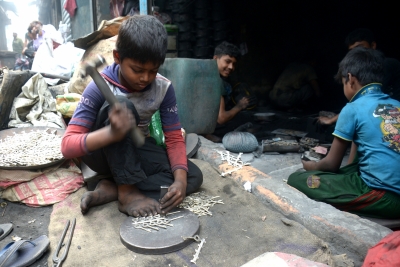
New Delhi, April 29 The '2026 Global Report on Food Crises' (GRFC) lists Bangladesh among the top 10 countries with the largest number of people who faced high levels of acute food insecurity in 2025, according to an article in The Daily Star, a Dhaka-based newspaper.
According to the report, around 1.6 crore people in Bangladesh faced crisis-level food insecurity or worse during the 2025 peak. These represented 17 per cent of the analysed population, although the report also notes that the analysed population covered 59 per cent of the total population, not the whole country.
The article by Dr Selim Raihan, professor of economics at Dhaka University, states that the persistence of food insecurity points to a more structural problem: low and unstable incomes, weak purchasing power, regional deprivation, climate exposure, inadequate nutrition outcomes, and gaps in social protection. For many households, the crisis is not that food is unavailable in the market, but that food is unaffordable, diets are poor, and coping mechanisms are already exhausted.
It further states that food inflation in Bangladesh in recent years has changed household behaviour. Families have reduced protein intake, shifted to cheaper staples, postponed health spending, borrowed from informal sources, and cut back on children’s needs.
When rice, edible oil, lentils, eggs, fish, and vegetables remain expensive for long periods, the damage happens on a nutritional level. Children suffer silently. Women often eat last and eat less. Elderly people in poor households become more dependent on irregular support.
The article also highlights that while remittances helped in 2025, this should not become a reason for complacency. Remittance inflows are unevenly distributed across regions and households. They support many families, but they cannot substitute for a national food security strategy. The food security challenge is, therefore, also a question of inequality, it added.
The article opines that food security policy must go beyond food availability. Bangladesh has done reasonably well in increasing rice production and maintaining staple supplies. But food security is also about access, nutrition, stability, and dignity. The policy lens must shift from “Is there enough rice?” to “Can poor households afford a nutritious diet throughout the year?” This requires regular monitoring of food baskets, not only headline inflation.
Disclaimer: This post has been auto-published from an agency feed without any modifications to the text and has not been reviewed by an editor
Open in app