
Abducted and converted to Islam: Report highlights plight of Christian girls in Pakistan
By IANS | Updated: January 5, 2026 19:00 IST2026-01-05T18:57:37+5:302026-01-05T19:00:27+5:30


Islamabad, Jan 5 A 21-year-old Christian from Rawalpindi was disappeared from her home last November and forcibly converted ...
Abducted and converted to Islam: Report highlights plight of Christian girls in Pakistan
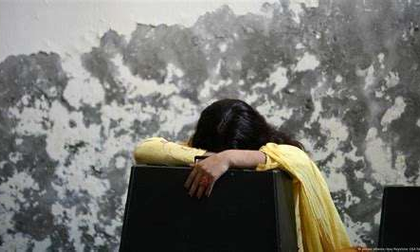
Islamabad, Jan 5 A 21-year-old Christian from Rawalpindi was disappeared from her home last November and forcibly converted to Islam in yet another case of forced conversion in Pakistan, a report highlighted on Monday.
Monica Jennifer told a local court that she had converted to Islam and married her next-door neighbour.
Speaking to Pakistan Christian Post, her family revealed that, in reality, Monica had been abducted and forcibly converted. A Protestant pastor, Imran Amanat, said that Christian girls remain at high risk in Pakistan, a report in Australia-based The Catholic Weekly highlighted.
"They are not safe, even though the law prohibits underage marriages and court marriages without parental consent. Yet some extremists exploit Islamic Sharia to justify these actions," The Catholic Weekly quoted Imran Amanat as saying.
Local authorities have termed such stories as "propaganda driven". However, an astonishing recent report from Pakistan’s own National Commission on the Rights of the Child, 'Children from Minority Religions in Pakistan' supports Amanat’s pessimistic assessment. About four per cent of Pakistanis belong to 'minority religions', mostly Christians and Hindus.
"In the words of the report, they battle with 'systemic discrimination', especially their children. At school they face discrimination at school by classmates and teachers; the curriculum reinforces prejudices again their religion. Many drop out of school. But 'the most concerning issue' is forced conversions," the report in Catholic Weekly stated.
According to the report, young girls, often minors, are abducted and coerced into converting to Islam, followed by forced marriages to older men. This practice often happens in Pakistan's Sindh and southern Punjab where religious minorities live.
"Once abducted, the girls are subjected to pressure, threats, and sometimes violence, forcing them to renounce their faith. The legal system often fails to protect these girls due to weaker enforcement of laws and societal biases. The courts sometimes validate these conversions and marriages by accepting dubious claims that the girls converted willingly, even when there is clear evidence of coercion," the report stated.
The United Nations has severely criticised forced conversions that are taking place in Pakistan. However, the report said that Pakistan’s failure to enforce previous recommendations has allowed these incidents to continue.
Last month, a leading minority rights organisation raised its deep concerns over the Pir Sarhandi shrine in Pakistan's Umerkot region, stating that the Sufi shrine has become one of the most "notorious" centres for the conversion of Hindu girls and women in Sindh province, especially those from poor and lower-caste communities.
According to the Voice of Pakistan Minority (VOPM), for years, Hindu families of the indigenous communities, including Bheel, Meghwar, and Kohli across Sindh, have accused the shrine of being directly involved in the abduction, coercion, and forced conversion of their daughters. The rights body stated that many of these girls are minors, some as young as 12–15 years old.
“In a region where Hindus make up over 50 per cent of the population, the Sarhandi shrine has become a symbol of fear for minority families — many now believe any daughter who steps outside is at risk of never returning home," the VOPM posted on X.
At the centre of this controversy, the rights body said, is cleric of the shrine Pir Muhammad Ayub Jan Sarhandi, who proudly claims to have overseen "thousands" of conversions — almost all of them Hindu girls, while his brother, Pir Waliullah, echoes the same boast.
"These conversions often follow the same disturbing pattern: A Hindu girl disappears — sometimes lured, sometimes abducted — then reappears at the Sarhandi shrine already converted and married to a Muslim man, without age checks or consent verification," the VOPM stated.
"The shrine's madrassa, Gulzar-i-Khalil, is described as a rapid conversion pipeline. Ceremonies are conducted instantly. Critics say this speed serves one purpose: to give abductors legal cover before families can intervene," it added.
Disclaimer: This post has been auto-published from an agency feed without any modifications to the text and has not been reviewed by an editor
Open in app