
Back to the days of colonialism and gunboat diplomacy: Former Ambassador to Venezuela Y.K. Sinha
By ANI | Updated: January 5, 2026 14:10 IST2026-01-05T19:40:11+5:302026-01-05T14:10:14+5:30


New Delhi [India], January 5 : Former Indian Ambassador to Venezuela Y.K. Sinha has sharply questioned recent U.S. actions ...
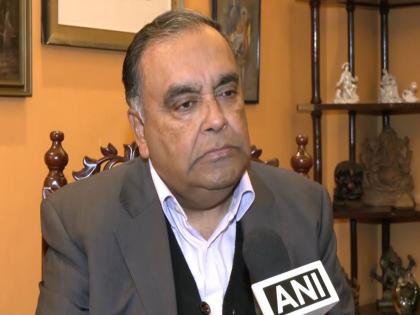
Back to the days of colonialism and gunboat diplomacy: Former Ambassador to Venezuela Y.K. Sinha
New Delhi [India], January 5 : Former Indian Ambassador to Venezuela Y.K. Sinha has sharply questioned recent U.S. actions and statements on Venezuela, calling them troubling for international law, regional stability, and global norms of sovereignty. Speaking to ANI, Sinha described U.S. President Donald Trump's claim that Washington would "run" Venezuela until a power transition takes place as "quite astounding," especially given the legacy of past interventions.
Sinha expressed particular concern over what he described as the forcible removal and rendition of Venezuela's president. "Is it an acceptable norm that another country... abducts the president, and takes him to stand trial in a foreign court?" he asked. "As per international law, is this acceptable? This is a question that everyone should ask."
While acknowledging that Venezuela's political situation remains deeply contested, Sinha stressed that foreign control is unlikely to find acceptance among ordinary citizens. "Will any self-respecting country, self-respecting people, irrespective of what their political affiliations are, accept being run by a foreign power?" he said, adding that such moves evoke memories of "the days of colonialism and gunboat diplomacy."
On the ground, Sinha noted, the situation remains fluid. He pointed out that Venezuela's vice president, Delcy Rodriguez, has reportedly assumed the presidency in line with constitutional provisions and is mandated to hold elections within 30 days. "She doesn't speak about the U.S. running the country," he observed, cautioning that "till the facts come out in the open, it's very difficult to understand what exactly is happening."
Commenting on global reactions, Sinha said most of the international community has responded cautiously. "The international community has by and large not supported the action," he noted, adding that India's response has been "very measured." New Delhi, he said, must balance its principles with its strategic interests. "We have to be mindful of our own bilateral relations with the United States and other countries," Sinha explained, while welcoming India's call for dialogue and concern for the safety of Indians in Venezuela.
Sinha also warned of broader regional consequences. "When you take arbitrary action like this, it opens a Pandora's box," he said, arguing that U.S. intervention risks deepening instability across Latin America, a region with a long memory of external interference.
On energy, Sinha downplayed the immediate impact on India, noting that Indian oil imports from Venezuela are already minimal due to sanctions and declining production. Still, he suggested resources remain a key underlying factor. "President Trump even referred to it as 'our oil'," Sinha recalled, adding that any revival of Venezuela's oil sector would take years.
Ultimately, Sinha emphasized that India would continue to act in its own national interest. "India is not a small country that can be browbeaten," he said, underscoring New Delhi's commitment to strategic autonomy amid intensifying great-power rivalries.
Disclaimer: This post has been auto-published from an agency feed without any modifications to the text and has not been reviewed by an editor
Open in app