
Ex-Pentagon spokesman raises legal, credibility concerns over Venezuela action (IANS interview)
By IANS | Updated: January 7, 2026 06:55 IST2026-01-07T06:52:01+5:302026-01-07T06:55:16+5:30


Washington, Jan 7 A former Pentagon press secretary has raised serious questions about the legal basis, messaging, and ...
Ex-Pentagon spokesman raises legal, credibility concerns over Venezuela action (IANS interview)
Washington, Jan 7 A former Pentagon press secretary has raised serious questions about the legal basis, messaging, and global implications of the recent US military action in Venezuela, warning that conflicting explanations from the Trump administration risk damaging America’s credibility with allies and partners.
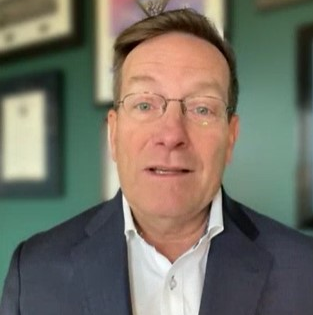
In an exclusive interview with IANS, Dave Lapan, a retired US Marine colonel who served as Pentagon press secretary and later as deputy assistant secretary for media relations at the Department of Homeland Security, said key questions about the Venezuela operation remain unanswered days after it was carried out.
“Even though we are several days past when the operation was conducted, there are still so many unanswered questions,” Lapan said, pointing to uncertainty over the legal authority under which the mission was launched and its true purpose.
He noted that the administration has offered multiple, and at times conflicting, explanations. “Was this an arrest of an alleged drug trafficker? Was it about taking oil from Venezuela? Was it about regime change?” Lapan asked. “There are many different explanations, many of which are contradictory.”
Responding to a series of questions on the military actions in Venezuela, Lapan said the lack of clarity makes it difficult for both Americans and the international community to understand what happened and what comes next.
Drawing comparisons with US military campaigns in Afghanistan and Iraq, Lapan stressed a key difference. “In Iraq and Afghanistan, they were declared wars,” he said, noting that Congress authorized those operations. In Venezuela, he said, the situation is different.
“Even though this was not a large-scale operation like Iraq or Afghanistan, it did involve military force and lethal military force,” Lapan said. He added that “dozens of people were killed” and that US service members were wounded.
He said Congress neither authorised nor was briefed on the operation in advance. “They weren’t even briefed about the operation until it was over,” he said, calling the situation “uncharted territory in many ways.”
From a purely military standpoint, Lapan acknowledged the operation’s effectiveness. “From a military-only perspective, it was very successful,” he said, citing surprise, suppression of air defenses, and the ability of US forces to enter and exit Venezuela quickly.
However, he questioned the administration’s claim that the action was essentially a law-enforcement operation supported by the military. “Many legal scholars have weighed in to say that is not an adequate justification,” Lapan said, adding that the absence of clear answers is troubling.
As a former senior spokesman, Lapan also criticized how the operation was communicated. He contrasted current practices with earlier Pentagon briefings. “We tried very hard to provide clear and accurate information as quickly as possible,” he said, often with senior military leaders briefing reporters at the Pentagon.
“That’s not what we’re seeing now,” Lapan said, noting that the chairman of the Joint Chiefs briefed reporters at the White House rather than the Pentagon, and that the standing Pentagon press corps has effectively been dismantled.
He warned that this vacuum fuels confusion and mistrust. “It raises questions about the appropriate role of the US military,” he said, including its use overseas without congressional authority and domestically.
Lapan said the Venezuela action also sends troubling signals abroad. “It creates uncertainty and confusion among our friends and allies,” he said, including partners in Europe and Asia. “They have to wonder whether treaties even matter anymore.”
“That directly impacts the credibility of the United States,” Lapan said. “Our partners have to question whether we can be trusted anymore—and that’s a very sad thing to say.”
Disclaimer: This post has been auto-published from an agency feed without any modifications to the text and has not been reviewed by an editor
Open in app