
India can be a massive architect in AI: Economist Danny Quah
By ANI | Updated: April 29, 2026 13:50 IST2026-04-29T19:18:10+5:302026-04-29T13:50:18+5:30



New Delhi [India], April 29 : Noting that India's strength has been in services and technology, world-renowned Economist Danny ...
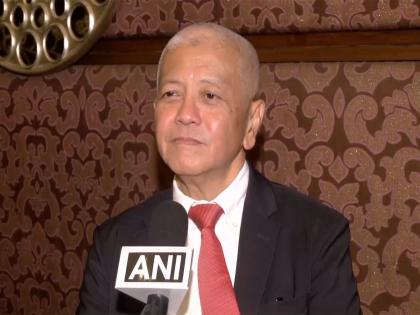
India can be a massive architect in AI: Economist Danny Quah
New Delhi [India], April 29 : Noting that India's strength has been in services and technology, world-renowned Economist Danny Quah on Wednesday said the country can emerge as a "massive architect" in Artificial Intelligence, as opportunities in the sector are "essentially unbounded."
Speaking exclusively to ANI, Quah, Professor in Economics at the Lee Kuan Yew School of Public Policy, National University of Singapore, also said India can play a key role in building coalitions of like-minded countries to deal with what he described as the "disruptive" economic policies of US President Donald Trump.
When asked about India's future and where it should focus, Quah said India should leverage its strengths in technology, high-quality services, and English-language capabilities. "The opportunity in technology, especially AI, is essentially unbounded... India can be a massive actor in that space," he said.
When asked Trump's imposing tariffs on India and other countries, Quah said Trump's policies are driven by the belief that the United States has been "taken advantage of" by the rest of the world and must now "get back" at others. "A lot of his supporters endorse these policies because he crafts them in that way," he said, adding that most neutral observers believe the US has in fact "benefited hugely from the world that it itself created over the last eight decades."
He noted that while the US had long warned against other powers being "revisionist" and disrupting a rules-based global order, "it turns out that it's America that's doing the revisionism." According to Quah, other major economies are adopting a wait-and-watch approach amid the uncertainty generated by Washington's moves.
Quah further pointed out that the US shift towards protectionism is not entirely new but rooted in its historical tradition, tracing it back to figures like Alexander Hamilton and Abraham Lincoln. He said the past eight decades of relatively open trade may have been an "aberration" in a longer trajectory of American economic thinking.
"The question now is whether America will continue returning to that earlier path of protectionism and isolationism, or recognise that being part of the international community has made it stronger," he said, adding that there is still no clear answer on which direction the US will take.
On how India should respond, Quah outlined three possible strategies alignment, acquiescence, and mitigation noting that blind alignment with the US may not suit a country of India's size and interests. He said acquiescence could offer temporary strategic space, but emphasised that mitigation, through building multilateral coalitions and cooperative systems, would be a more sustainable path.
"India is large enough to help build systems that work for it, alongside others," he said, stressing that New Delhi could play a leading role in shaping a more balanced global order through "coalitions of the willing."
Disclaimer: This post has been auto-published from an agency feed without any modifications to the text and has not been reviewed by an editor
Open in app