
"India has a role in the de-escalation in West Asia": Former Indian diplomat highlights New Delhi's "dual-trust" status with Iran and US
By ANI | Updated: April 15, 2026 20:35 IST2026-04-16T02:03:39+5:302026-04-15T20:35:10+5:30



New Delhi [India], April 15 : As tensions simmer in West Asia, New Delhi is increasingly viewed not just ...
"India has a role in the de-escalation in West Asia": Former Indian diplomat highlights New Delhi's "dual-trust" status with Iran and US
New Delhi [India], April 15 : As tensions simmer in West Asia, New Delhi is increasingly viewed not just as a concerned bystander, but as a uniquely positioned mediator capable of cooling the region's geopolitical temperature.
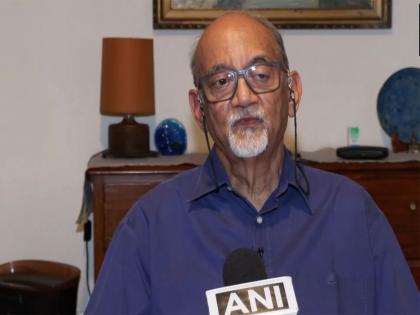
Speaking with ANI, former Indian diplomat and ex-Ambassador to Iran, Dinkar P Srivastava, highlighted that India's "dual-trust" status with both Tehran and the Washington-Tel Aviv axis makes it a rare candidate for diplomatic de-escalation.
Speaking on the evolving geopolitical situation, Srivastava said, "India is uniquely positioned to act as a trusted interlocutor given its historical and diplomatic relations with countries across the divide."
Srivastava emphasised that India's foreign policy legacy provides it with a seat at two very different tables. While India maintains deep-rooted, historical ties with Iran, it simultaneously enjoys a robust strategic partnership with the United States and Israel.
"India has a role in the de-escalation in West Asia because India is trusted by both sides. We have historical relations with Iran. I was the Indian ambassador there. We also have good relations with the US and Israel. We have a reason, we have a role for de-escalation. As a major user of Strait, we have an interest in ensuring that the Strait remains open. India can come forward and make an offer, or at least we can state that we are willing to play a role," said Srivastava.
For India, de-escalation isn't just about regional peaceit's about national survival. The Strait of Hormuz serves as the jugular vein for India's energy needs. Any disruption to this narrow waterway would have an immediate, cascading effect on the Indian economy.
Highlighting India's vulnerability to disruptions in the Strait of Hormuz, one of the world's most critical oil transit chokepoints, Srivastava pointed to the country's heavy reliance on energy imports passing through the route.
"India gets 25% of its oil and 30% of its LNG through the Hormuz. And we also get our LPG, which is from the other side of the Gulf, but it also comes from Saudi Arabia, where it also has to pass through the Strait of Hormuz. So any closure of the Hormuz Strait or restriction affects India. Iran has allowed Indian ships to sail through, but the volume of traffic remains limited. Fortunately, President Trump has announced that the next round of talks will take place, and this has calmed the markets. But otherwise, there is a possibility that things could go southwards."
The Strait of Hormuz, connecting the Persian Gulf with the Arabian Sea, is widely regarded as a global energy lifeline, with a substantial portion of the world's oil shipments passing through it. Any disruption in the corridor is known to have immediate repercussions on global crude prices and supply chains, with India among the most affected import-dependent economies.
Srivastava's remarks come at a time when diplomatic efforts are being closely watched by energy markets, with periodic tensions in the region raising fears of supply disruptions. He suggested that India's strategic interests align with ensuring stability and uninterrupted maritime traffic, especially given its growing energy demands.
His comments also reflect broader discussions within policy circles about India's increasing role in global conflict mediation, particularly in regions where it maintains neutral yet constructive relationships with all major stakeholders.
Disclaimer: This post has been auto-published from an agency feed without any modifications to the text and has not been reviewed by an editor
Open in app