
Indonesia flood death toll exceeds 1,000 as rescue, recovery efforts continue
By IANS | Updated: December 13, 2025 14:35 IST2025-12-13T14:34:21+5:302025-12-13T14:35:12+5:30


Jakarta, Dec 13 The death toll from floods and landslides that struck three provinces on Indonesia's Sumatra Island ...
Indonesia flood death toll exceeds 1,000 as rescue, recovery efforts continue
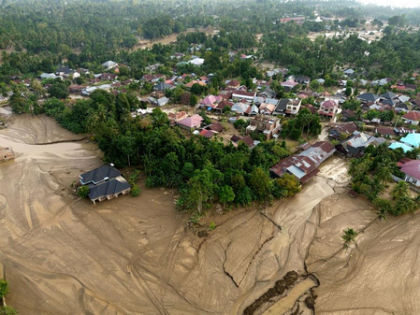
Jakarta, Dec 13 The death toll from floods and landslides that struck three provinces on Indonesia's Sumatra Island has exceeded 1,000, with 218 people still missing, according to the latest data released Saturday by the National Disaster Management Agency (BNPB).
The disasters have caused extensive infrastructure damage. BNPB data listed damage to about 1,200 public facilities, as well as 219 health facilities, 581 educational facilities, 434 houses of worship, 290 office buildings and 145 bridges.
Abdul Muhari, head of BNPB's Data and Information Center, said at a press conference on Friday that data verification and cross-referencing with civil records are ongoing at the sub-district level. He noted that victims are being confirmed by name and address and that the verification process continues in several districts, Xinhua news agency reported.
Meanwhile, Indonesian President Prabowo Subianto said during his visit to disaster-hit areas in Aceh on Friday that the government continues to work to fulfill various basic needs of the community.
"Together we will improve this situation. The government will step in and help with everything," Prabowo said.
He also called on all citizens to remain steadfast and keep their spirits up during the recovery process, expressing hope that community activities, including teaching and learning for children, can return to normal soon.
Earlier this week, Subianto chaired a meeting on disaster response and recovery efforts after inspecting several affected locations in Aceh.
He instructed strengthened joint operations involving the military, police, the national search and rescue agency, BNPB and local governments, particularly in accelerating aid delivery, ensuring security and restoring connectivity between regions cut off by the disaster.
Asia is currently warming nearly twice as fast as the global average, fuelling more extreme weather and wreaking a heavy toll on the region's economies, ecosystems and societies, according to the World Meteorological Organisation.
Hijrah Saputra, lecturer in disaster management at Indonesia's Airlangga University, noted that the early warning system has not reached remote villages, spatial planning is not yet disciplined, and environmental rehabilitation is still sporadic.
"If we want to reduce casualties in the future, then resilience must be built through spatial planning, watershed ecology, and regionally integrated early warning systems," he said.
Disclaimer: This post has been auto-published from an agency feed without any modifications to the text and has not been reviewed by an editor
Open in app