
Iran regime 'unsustainable', says ex-US NSA, flags corruption, repression
By IANS | Updated: April 22, 2026 12:25 IST2026-04-22T12:21:10+5:302026-04-22T12:25:19+5:30



Washington, April 22 Former US National Security Advisor (NSA) H.R. McMaster has said the Iranian regime is unlikely ...
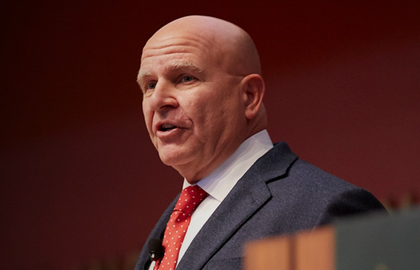
Iran regime 'unsustainable', says ex-US NSA, flags corruption, repression
Washington, April 22 Former US National Security Advisor (NSA) H.R. McMaster has said the Iranian regime is unlikely to sustain itself, citing military setbacks, corruption and widespread repression as key factors weakening its hold on power.
“I do not think that the Islamic Republic of Iran can sustain itself,” McMaster told IANS in an exclusive interview. “I think it’s unsustainable,” he said, responding to a question on the Iranian regime after the US dismantled its entire leadership and armed forces.
He pointed to the cumulative impact of recent developments on the regime’s ability to function. “The damage that has been done to its military… to its ability to project power outside of its borders,” he said, has been significant.
McMaster, who served as national security advisor to President Donald Trump in his first term, also emphasised internal challenges, arguing that the regime has undermined itself through its policies. “The damage that it has done to itself and its own people through corruption,” he said.
He criticised Tehran for prioritising military ambitions over domestic welfare. “Prioritising a nuclear weapons programme and its missile programmes over the welfare of its own people,” he said.
McMaster said that the financial cost of these programmes has been enormous. “The waste of… tens of billions, if not hundreds of billions of dollars,” he added.
Highlighting systemic corruption within the ruling establishment, he said: “Collectives associated with the regime… are extracting money and sending it abroad.”
He also referred to offshore financial holdings linked to senior leadership. “Tens of millions of dollars in offshore accounts,” he noted.
The former NSA raised concerns over human rights abuses by the regime. “Executions… against political prisoners,” he said, continue to take place.
He cited what he described as a particularly severe episode of violence. “The mass murder… of what appears to be 40,000 people in a 48-hour period in January,” he said.
McMaster said the humanitarian dimension remains central to the crisis. “The stakes are highest for the Iranian people,” he said.
He called for sustained international efforts to weaken the regime’s coercive apparatus. “The need to… continue actions… to weaken the repressive arms of the theocratic dictatorship,” he said.
Linking Iran to broader regional instability, McMaster said the regime has long engaged in indirect conflict. It has been “waging… a proxy war… for 47 years,” he said.
He also connected Iran’s position to global geopolitical competition, particularly China’s role. Beijing’s economic engagement, including large-scale oil purchases, provides critical financial support to Tehran, he said.
“They buy 90 per cent of Iran’s oil,” McMaster noted, describing it as a key revenue stream for the regime.
He argued that changes within Iran could have wider implications. A fundamental shift in the regime, he suggested, would alter dynamics in the Middle East and beyond.
Disclaimer: This post has been auto-published from an agency feed without any modifications to the text and has not been reviewed by an editor
Open in app