
Manoj Kumar Sharma takes charge as 33rd Chief Justice of Nepal
By ANI | Updated: May 19, 2026 21:55 IST2026-05-20T03:20:30+5:302026-05-19T21:55:10+5:30



Kathmandu [Nepal], May 19 : Justice Manoj Kumar Sharma has formally assumed office as the Chief Justice following his ...
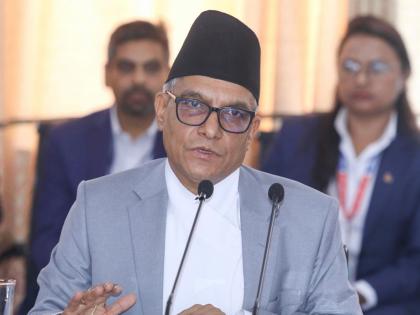
Manoj Kumar Sharma takes charge as 33rd Chief Justice of Nepal
Kathmandu [Nepal], May 19 : Justice Manoj Kumar Sharma has formally assumed office as the Chief Justice following his appointment and oath of office. The appointment of Sharma as Chief Justice concludes a process that had drawn extensive political and legal attention in recent weeks.
President Ram Chandra Paudel appointed Sharma to the post on Tuesday after his name was unanimously approved by the Parliamentary Hearing Committee.
Following the appointment, Sharma took his oath of office and is set to begin his responsibilities at the Supreme Court from Wednesday, including overseeing bench allocation and daily case management.
With this appointment, Sharma becomes the 33rd Chief Justice and will serve a six-year term as outlined under Article 129(4) of the Constitution.
His elevation has been closely watched due to the decision of the Constitutional Council to recommend a candidate outside the traditional seniority-based convention of the Supreme Court.
The council selected Sharma, who is fourth in the seniority order, instead of Acting Chief Justice Sapana Pradhan Malla and other senior justices, including Kumar Regmi and Hari Prasad Phuyal.
The move led to internal disagreement within the Constitutional Council, where National Assembly Chair Narayan Dahal and opposition representative Bhishmaraj Angdembe expressed dissent over what they described as a departure from established judicial tradition.
They argued that Nepal's judiciary has long followed seniority as the guiding principle for recommending the Chief Justice and cautioned against deviating from this practice without strong institutional justification.
On the other hand, proponents of the decision said that merit, professional competence, and judicial experience should be given greater priority than seniority alone when selecting the head of the judiciary.
The decision also drew attention from legal experts and stakeholders, including the Nepal Bar Association, some of whom warned that bypassing senior judges without clear reasoning could raise concerns about executive influence in judicial appointments.
Born in Birgunj of Parsa district on June 18, 1970, Sharma has a long background in law and is related to former Chief Justice Damodar Sharma.
He holds a Bachelor of Law degree from Nepal Law Campus in Kathmandu, a Master of Laws from the University of Pune in India, and a PhD in Labour Law from Tribhuvan University.
Sharma entered legal practice in the 1990s and worked across private law firms and consultancy roles before joining the judiciary.
He served as an appellate court judge before being appointed to the Supreme Court on April 18, 2019.
Since February 2024, he has been serving on the Constitutional Bench of the Supreme Court.
Over the course of his judicial career, Sharma has participated in several national and international legal forums and contributed to discussions on judicial reform and access to justice.
Under constitutional provisions, he is eligible to serve a full six-year term before reaching the retirement age limit of 65.
His appointment is being seen as a significant moment in Nepal's judicial history, particularly due to the departure from the long-standing seniority convention that has traditionally guided leadership transitions in the Supreme Court.
Disclaimer: This post has been auto-published from an agency feed without any modifications to the text and has not been reviewed by an editor
Open in app