
Pakistan using transnational repression to target diaspora, says rights advocate Mehlaqa Samdani
By ANI | Updated: December 19, 2025 21:15 IST2025-12-19T21:13:13+5:302025-12-19T21:15:04+5:30


Washington DC [US], December 19 : Pakistan's military-backed establishment is increasingly using transnational repression to intimidate critics and activists ...
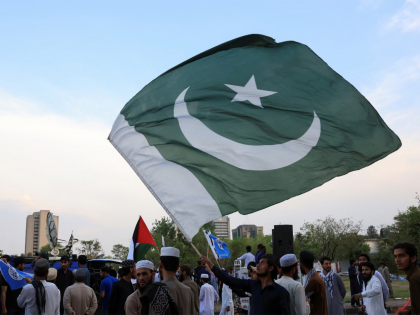
Pakistan using transnational repression to target diaspora, says rights advocate Mehlaqa Samdani
Washington DC [US], December 19 : Pakistan's military-backed establishment is increasingly using transnational repression to intimidate critics and activists living abroad, according to Mehlaqa Samdani, executive director of the Community Alliance for Peace and Justice, an advocacy group focused on human rights, democracy and accountability in US foreign policy.
Samdani said she personally experienced this campaign of intimidation when, two months ago, Pakistan's National Cybercrimes Investigations Agency (NCIA) sent a legal notice to her ancestral home in Pakistan, accusing her of spreading "anti-state content" on social media.
The notice did not specify the posts in question but demanded that she appear in person before investigators, warning that failure to comply could result in the seizure of her "tangible or intangible identity, property, and accounts."
Samdani, a US citizen based in Massachusetts, said the notice was issued in response to her public advocacy against Pakistan's human rights violations and served as a chilling reminder of how far the Pakistani regime is willing to go to monitor and intimidate activists beyond its borders.
According to Samdani, the case is emblematic of a wider pattern of transnational repression, a practice in which authoritarian governments target diaspora and exile communities.
Citing Freedom House, she noted that such repression includes tactics such as family harassment, digital surveillance, misuse of cybercrime laws, smear campaigns, abuse of INTERPOL mechanisms and, in some cases, extraterritorial killings.
While such practices are often associated with countries like Saudi Arabia, China, Russia and Iran, Samdani highlighted that Pakistan is officially identified by both Freedom House and the US State Department as one of 26 countries engaged in transnational repression, despite being a key US security partner.
Samdani warned that the issue has become particularly urgent amid renewed US engagement with Pakistan.
She pointed out that the Trump administration has sought cooperation with Islamabad on critical minerals, cryptocurrency ventures and counterterrorism, while, in her view, disregarding serious human rights violations.
"This is not just a diaspora issue," Samdani stated, arguing that transnational repression represents a test of whether the United States can defend its own democracy and protect the constitutional rights of its citizens.
Highlighting other cases, Samdani referred to the March abduction of the brothers of Pakistani-American investigative journalist Ahmad Noorani, which took place shortly after Noorani published a report alleging corruption and nepotism within the Pakistani military.
She said the brothers were subjected to weeks of psychological torture and physical abuse and were released only after sustained international pressure.
According to Samdani, intimidation is not limited to journalists or activists.
She said Pakistani-American small business owners, students and social media influencers have also faced reprisals, including family abductions and business closures in Pakistan, simply for posting criticism online.
Samdani linked these incidents to what she described as Pakistan's broader pattern of military authoritarianism and systemic human rights abuses.
She cited allegations that Pakistan's military and intelligence agencies manipulate elections, censor the media, use lethal force against unarmed protesters, abduct and forcibly disappear Baloch and Pashtun activists, intimidate judges through surveillance and detain hundreds of political prisoners.
Among those detained is former Prime Minister Imran Khan, whose continued incarceration has been deemed unlawful by the UN Working Group on Arbitrary Detentions, Samdani noted.
She also pointed to the recent passage of Pakistan's 27th constitutional amendment, which grants lifetime immunity to Army Chief General Asim Munir and effectively ends judicial independence, as evidence that the military leadership has consolidated its control over the country's institutions.
Samdani criticised President Donald Trump's public praise of General Munir, whom he referred to as his "favorite Field Marshal", saying such remarks reflect US indifference to repression in Pakistan and carry serious consequences.
"When the US government supports authoritarianism abroad, it exposes its own citizens to foreign coercion and weakens democratic norms at home," Samdani warned, adding that it also sends a dangerous signal to other authoritarian regimes.
Referring to recent legislative action, Samdani welcomed a letter sent by 44 Democratic members of Congress, led by Representatives Pramila Jayapal and Greg Casar, to Secretary of State Marco Rubio, urging accountability for Pakistani military and civilian leaders accused of targeting Pakistani-Americans and violating their First Amendment rights.
However, she stressed that more action is required.
Samdani noted that the United States currently lacks specific legislation addressing transnational repression and urged Congress to advance bills such as the Transnational Repression Policy Act.
She also highlighted that the US does not have an official legal definition of transnational repression, forcing prosecutors to rely on fragmented statutes.
Citing the New Lines Institute, Samdani said a formal definition is critical to establishing a "whole-of-government approach" to countering the threat.
Samdani further called on US law enforcement agencies to expand outreach to diaspora communities, increase awareness and establish clear reporting mechanisms for harassment and threats, noting that many affected individuals are unaware that what they are experiencing has a name and legal remedies.
Finally, she urged Washington to use its leverage over Pakistan, including through the International Military Education and Training (IMET) programme, maintenance support for Pakistan's F-16 fleet and influence over IMF lending and financial access, to push back against democratic backsliding and transnational repression.
Disclaimer: This post has been auto-published from an agency feed without any modifications to the text and has not been reviewed by an editor
Open in app