
Pakistan's population boom persists as state neglects education, family planning reforms
By ANI | Updated: December 12, 2025 12:05 IST2025-12-12T12:03:21+5:302025-12-12T12:05:13+5:30



Islamabad [Pakistan], December 12 : Pakistan's long-delayed fertility transition has stagnated, showing little to no progress since 2006, according ...
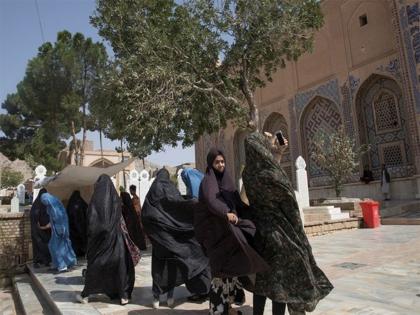
Pakistan's population boom persists as state neglects education, family planning reforms
Islamabad [Pakistan], December 12 : Pakistan's long-delayed fertility transition has stagnated, showing little to no progress since 2006, according to a new study launched by the Population Council with the support of the Foreign, Commonwealth and Development Office (FCDO).
The report, titled "Unlocking the Stall in Fertility Decline and Socio-Economic Development in Pakistan," reveals that while fertility rates once declined swiftly, they have since plateaued due to the country's sluggish social and economic development, as reported by Dawn.
According to Dawn, the study points to deep-rooted cultural attitudes that continue to value larger families, leading to weak acceptance of modern contraceptive practices, even among younger Pakistanis. Persistently low levels of female education, high child mortality and slow income growth remain the major drivers of the fertility stall. During the launch event, Dr Zeba Sathar, the Population Council's Country Director, highlighted that Pakistan is one of the few countries in South Asia where fertility has remained unchanged for nearly twenty years, averaging 3.6 children per woman.
She emphasised that women's education, empowerment and economic participation are vital to breaking this cycle. "Without improving these areas, Pakistan's fertility will remain high, and its development progress will continue to suffer," she stated.
Setting the broader global and regional context, Dr John PM Bongaarts, former Vice President of the Population Council, noted that while several nations have achieved lower population growth and corresponding economic progress, Pakistan's stalled fertility threatens its development trajectory.
He stated that unless immediate measures are taken to meet the unmet need for family planning and ensure consistent delivery of voluntary reproductive health services, Pakistan will continue facing unmanageable population pressures, as cited by Dawn.
UNFPA Country Representative Dr Luay Shabaneh further stated that despite women's growing preference for smaller families, inconsistent policies, weak healthcare systems and inadequate contraceptive supplies limit their choices. He stressed the need to expand the Lady Health Workers programme nationwide.
The study concluded that Pakistan must, by 2035, halve child mortality, double the proportion of women with secondary education, and cut poverty and inequality to reverse its fertility stagnation, as reported by Dawn.
Disclaimer: This post has been auto-published from an agency feed without any modifications to the text and has not been reviewed by an editor
Open in app