
Political instability, floods to hit Nepal's economy hard: ADB
By IANS | Updated: December 11, 2025 21:05 IST2025-12-11T21:02:21+5:302025-12-11T21:05:26+5:30



Kathmandu, Dec 11 The Asian Development Bank (ADB) has projected that Nepal’s economy is likely to experience slowed ...
Political instability, floods to hit Nepal's economy hard: ADB
Kathmandu, Dec 11 The Asian Development Bank (ADB) has projected that Nepal’s economy is likely to experience slowed growth in the current fiscal year 2025-26, with political instability weighing on the non-agriculture sector and delayed monsoon and floods affecting agricultural output.
In its 'Nepal: Macroeconomic Update' released on its website, the Asian lender said the country’s economy is projected to grow by 3 per cent in fiscal year 2025–26, which began in mid-July, down from 4.6 per cent in fiscal year 2024–25. The projected growth is half of the 6 per cent target set by Nepal’s government for the current fiscal year.
According to the ADB, the performance of various sectors of the economy will be weaker compared to last fiscal year, pulling down overall economic growth.
Political instability is expected to have a major impact on the manufacturing sector. Manufacturing growth is projected to moderate sharply to 1.7 per cent this fiscal year from 3.8 per cent a year earlier, weighed down by deepening political uncertainty that has stalled production. “As uncertainty clouds the investment climate, both domestic and foreign investors are likely to adopt a cautious stance, delaying capital investments and project commitments,” the ADB said.
The September 8–9 civil unrest has shaken private-sector confidence, hindering previous momentum and making it difficult for businesses to match last year’s performance.
During the Gen-Z protests in early September, Nepal witnessed the destruction of public and private infrastructure and the deaths of several Gen-Z demonstrators. The protests, launched by unorganised youths, led to the collapse of the powerful government led by former Prime Minister K P Sharma Oli, paving the way for a new government under current Prime Minister Sushila Karki.
According to preliminary estimates, the private sector has incurred losses of around NPR 36 billion (0.6 per cent of GDP) and remains cautious as business sentiment stays subdued, the ADB said. In response, industry stakeholders called for urgent relief measures, including loan rescheduling and restructuring, tax deferments, and targetted refinancing support for severely affected enterprises.
Recognising these concerns, the Interim government led by Karki unveiled the 'Economic Revival and Business Recovery Plan' on September 21, aimed primarily at addressing private-sector needs and restoring economic confidence.
The ADB said domestic demand is expected to remain subdued this fiscal year, as both consumer confidence and business sentiment continue to be depressed following political instability. Despite rising remittances, private consumption expenditure is unlikely to grow as expected. Since the Covid-19 pandemic, Nepal's economy has struggled to fully recover. The private sector has repeatedly complained about weak market demand, which has forced them to reduce production. Political uncertainty since the Gen-Z movement has further aggravated the situation.
The construction subsector is also likely to decline this fiscal year, as federal capital budget execution continues to underperform. According to the ADB, the private sector will be more focused on retrofitting, refurbishing, and repairing damaged buildings and properties. “This slowdown in construction will also negatively impact mining and quarrying this fiscal year.” Overall, industry construction) growth is expected to moderate significantly to 2.1 per cent in fiscal year 2025–26 from 4.5 per cent a year earlier.
Wholesale and retail trade are expected to slow as consumers adopt a more cautious approach, further dampening momentum in one of the economy’s most vibrant sectors. Accommodation and food service activities are also likely to contract this fiscal year, as hotels have seen a decline in occupancy following the civil unrest.
Foreign-branded hotels, including the Hyatt Regency and Hilton, were severely damaged during the violent protests. The Hilton was burnt to the ground, while the Hyatt remains closed for maintenance. Arson and vandalism at hotel properties in Kathmandu and other regions caused damage worth NPR 25 billion, according to the Hotel Association of Nepal.
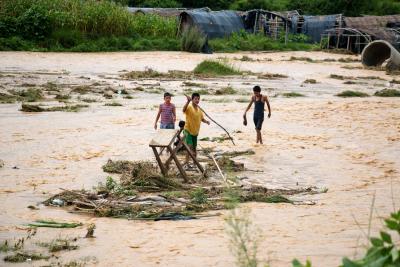
Agriculture is expected to grow by 2.9 per cent, down from 3.3 per cent a year earlier, as the delayed monsoon in the southern Madhesh Province and the flood damage in October 2025 reduce paddy output and disrupt food supply chains. Paddy, which contributes about 6 percent to the economy, is likely to grow less than last fiscal year.
In early December, Nepal’s central bank acknowledged that the economy is unlikely to achieve its targeted growth for the current fiscal year, citing the delayed monsoon and crop damage, along with flood- and landslide-related disruptions in other sectors.
Likewise, in early November, the World Bank said Nepal's economic growth could fall as low as 2.1 per cent in the current fiscal year, reflecting the impact of September’s public unrest and the resulting political instability.
Disclaimer: This post has been auto-published from an agency feed without any modifications to the text and has not been reviewed by an editor
Open in app