
Report highlights gaps in legal protections, custodial abuse allegations in Pakistan
By IANS | Updated: April 24, 2026 17:20 IST2026-04-24T17:18:31+5:302026-04-24T17:20:36+5:30



Islamabad, April 24 A new alternate report submitted to the UN Committee against Torture by the National Commission ...
Report highlights gaps in legal protections, custodial abuse allegations in Pakistan
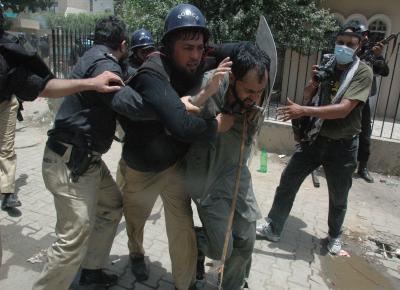
Islamabad, April 24 A new alternate report submitted to the UN Committee against Torture by the National Commission for Human Rights (NCHR) showcases gaps in Pakistan's legal protections, local media reported. The report, submitted ahead of the review of Pakistan's compliance with its obligations under the Convention against Torture, exposes incidents of custodial abuse and inadequacy in the country's enforcement of the Torture and Custodial Death (Prevention and Punishment) Act, 2022.
"The country ratified the Convention against Torture back in 2010, but seven years later, the UN expressed serious concern over the absence of adequate legal safeguards and lack of accountability for torture. Since then, while important progress has been made, the NCHR report says that significant issues still remain, including a statutory definition of torture that does not fully align with international standards, lacking an explicit reference to psychological pain and suffering, clearly defined penalties and sufficient provisions for victim rehabilitation and compensation," an editorial in Pakistan's leading daily The News International mentioned.
"The report also points to procedural weaknesses, including unclear mechanisms for complaint registration and investigation, inconsistencies with international standards for medical examinations, and limited scope for independent or suo-motu investigations," it added.
Despite the legal protections, allegations of torture against law enforcement agencies continue. The torture problem is hard to deal with as many feel that torture is an effective method against criminals.
The thinking in Pakistan is that under-resourced and under-equipped police, not helped by a clogged-up court system, has no option other than using unscrupulous methods to implement the law and maintain peace. According to the News International, if this was the correct way, Pakistan would not have law and order issues it currently was facing.
Meanwhile, a lady health worker from Muzaffargarh city of Pakistan's Punjab province requesting country's Chief Justice to conduct an independent probe into the killing of her two sons in an alleged police ‘encounter’ demonstrates the eroding trust of people in provincial authorities to deliver justice. Her statement about police torture and the subsequent killing of her sons in a "so-called encounter" is not an isolated case, another report stated.
"It reflects a continuing pattern in which the once sporadic instances of police staging encounters to eliminate suspected criminals appear to have evolved into a systemic practice. Figures cited by the media and rights groups reinforce this concern," a recent editorial in Dawn stated.
"Estimates based on reported incidents indicate that hundreds of police encounters in recent months have resulted in a staggering number of deaths across Punjab. Rather than prompting action, these encounters have at times been praised by political authorities as an effective deterrent against crime. It signals not just tolerance of extrajudicial methods, but also a tacit endorsement of them as an official crime control policy," it added.
The increase in encounters demonstrates failure of the criminal justice system in Pakistan. Police relying on eliminating instead of prosecuting suspects showcases that investigation, evidence-gathering and trial processes are either too weak or too inconvenient to pursue. Each citizen has a right to a fair trial under the constitution. However, when the state starts to decide who should get that right and who should not, it crosses a dangerous threshold. The acceptance of these killings brutalises society, undermines people's trust and blurs the line between law enforcement and lawlessness, the editorial mentioned.
Disclaimer: This post has been auto-published from an agency feed without any modifications to the text and has not been reviewed by an editor
Open in app